
 Golf Tips & Education
 MacKenzie Tyler
 October 8, 2026
 Last Updated: October 9, 2026


Most golfers spend the bulk of their range time beating balls with a driver, then wonder why their scores never really drop. The short answer usually lives on the green. Putting accounts for roughly 35 to 40 percent of strokes you take in a round, and yet the practice green stays half-empty while the range stays packed. If you’re serious about shaving strokes, that’s the first habit worth breaking.
The good news is that putting practice doesn’t have to feel like repetitive, soul-crushing work. Golf putting games turn what would otherwise be a boring drill session into something with real stakes, pressure, competition, and the kind of focus that actually translates when you’re over a six-footer to halve a hole. Whether you’re on the practice green solo before a round or playing a side bet with your group on the course, this guide covers the best putting games for both situations: solo formats that build your stroke, and on-course games your group can run without needing a spreadsheet to track them.
Best Golf Putting Games for Practice
The best putting games for practice combine pressure, focus and repetition to sharpen your stroke on the greens.
Around the World
Around the World is a fun golf putting game where you place 4 to 8 golf balls in a circle around a single hole or cup, usually starting from short distances like 3 feet and moving farther out.

Your goal is to sink every putt in a row, going from one ball to the next in a circle. If you make all of them, you complete the challenge. For a pressure-focused version, a miss means restarting from the first ball. When playing with others, the winner can be the first player to complete the full circle, or the player who makes the most successful putts in a set number of attempts.
Ladder
The ladder putting game is a fun practice challenge where you try to make putts from increasing distances to improve your speed and accuracy. To play, you set up markers or tees at graduated intervals, such as 3 feet, 6 feet, 9 feet, and 12 feet away from the hole.
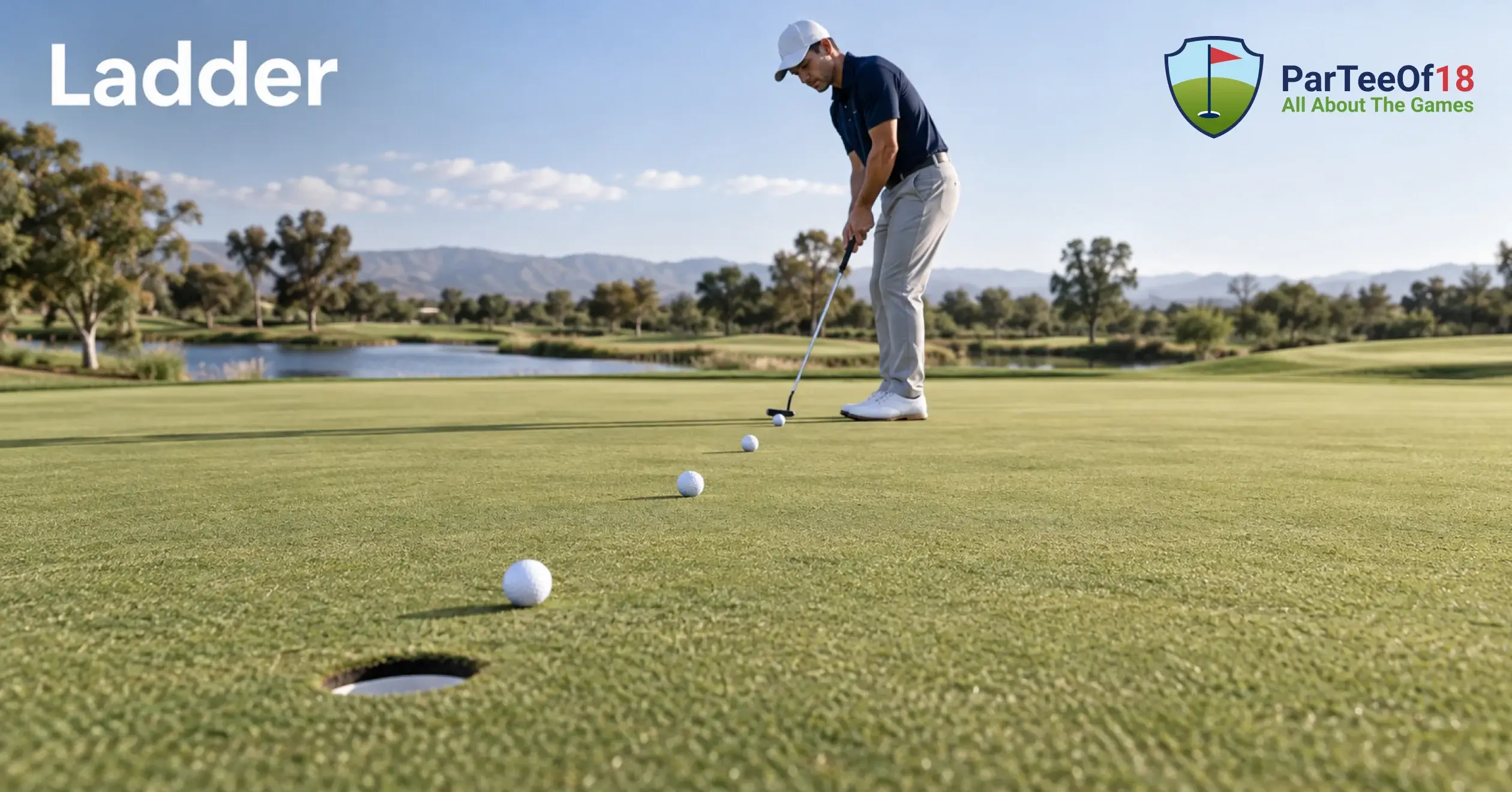
You start your first putt at the closest 3-foot mark; if you make it, you step back and climb up to the next rung of the ladder, but if you miss, you drop back down a step toward the hole. The goal is to successfully “climb the ladder” by making a putt from every distance all the way to the final, longest station.
Horse
Golf HORSE is a popular golf putting game borrowed from basketball, where you try to copy your friend’s successful putts. Player one picks any spot and tries to sink the putt. If they make it, Player Two must putt from that exact same spot and make it too, or they get the letter “H”.

If Player One misses, it is Player Two’s turn to pick a new spot. Every time you miss a matching putt, you get the next letter in the word H-O-R-S-E, and the first person to spell the full word loses the game.
Compass
The compass putting golf game is a simple practice drill where you place golf balls in a circle around a hole at the four main compass directions, North, South, East, and West, which usually start about three feet from the hole.
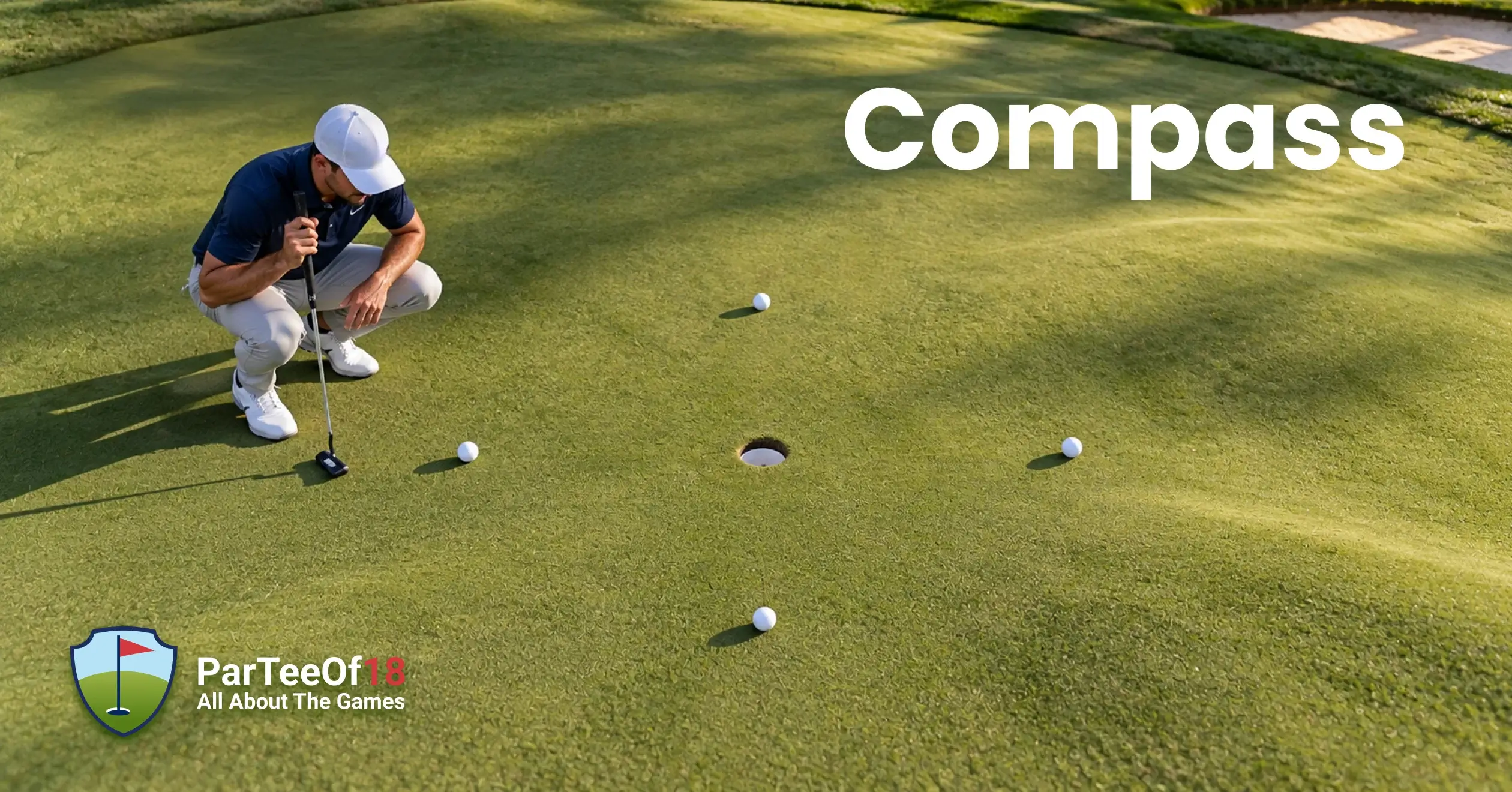
By putting from each spot, you get four different reads around the hole and can practice uphill, downhill, left-to-right, and right-to-left breaks when the green provides them. The goal is to sink every ball in a row or track your total score. As you get better, step back one foot at a time to make the challenge harder.
Putting Poker
Putting poker is a fun golf putting game where you can try to make putts to collect playing cards and build the best five-card poker hand. You set up five balls at different distances or spots around the hole and each successful putt lets you draw a card from a deck. After everyone takes a set number of turns, or finishes the putting rotation, the player with the highest-ranking poker hand wins the game.

60-Second Putt Challenge
The 60-second putt challenge is a fast-paced putting game that builds focus and trains you to handle the pressure under a time limit. You need one putter, and place three balls at 3 ft, 5 ft, and 7 ft from the hole. You can use a single hole on a practice green and set a stopwatch or phone timer for 60 seconds.

Start with your balls at the 3/5/7 foot marks, and when the timer starts, putt the 3-foot ball. Retrieve your ball (or use an extra ball) and putt the 5-foot ball, then the 7-foot ball. Repeat the same sequence (3 ft • 5 ft • 7 ft) as many times as you can before the 60 seconds run out. You must make the putt to move to the next distance; if you miss, you must putt from that same spot until it goes in. Your final score is the total number of successful putts you made before the time expired.
On-Course Putting Games to Play With Your Group
Now that you have learned about the best golf putting games for practice, here are the popular on-course golf putting games, and side bets designed to add pressure and fun to the greens.
Snake
Snake is a popular on-course golf putting game where the first player to three-putt takes the snake, often a physical token or imaginary title. If another player three-putts later in the round, the snake transfers to them. Avoid being the last player in the group to complete this putting game because whoever holds the snake when the final green is finished loses and pays a pre-agreed penalty or the collected cash pot to the other players.

Three Putt Monty
Three Putt Monty is another three-putt game similar to Snake, where the penalty can increase each time the three-putt token transfers to another player. Groups can use a fixed penalty or agree to an escalating or doubling penalty before the round starts. The focus is to avoid holding the penalty chip or money token for the last three-putt. It adds friendly pressure to the greens and rewards players who can avoid mistakes.

3 Putt Poker
In one common version of 3-putt poker, players put their money into a central pot at the start, where a 1-putt earns you a playing card from the deck, a 2-putt earns nothing and a 3-putt forces you to pay a small fine into the pot and can take or pass a designated poker chip.
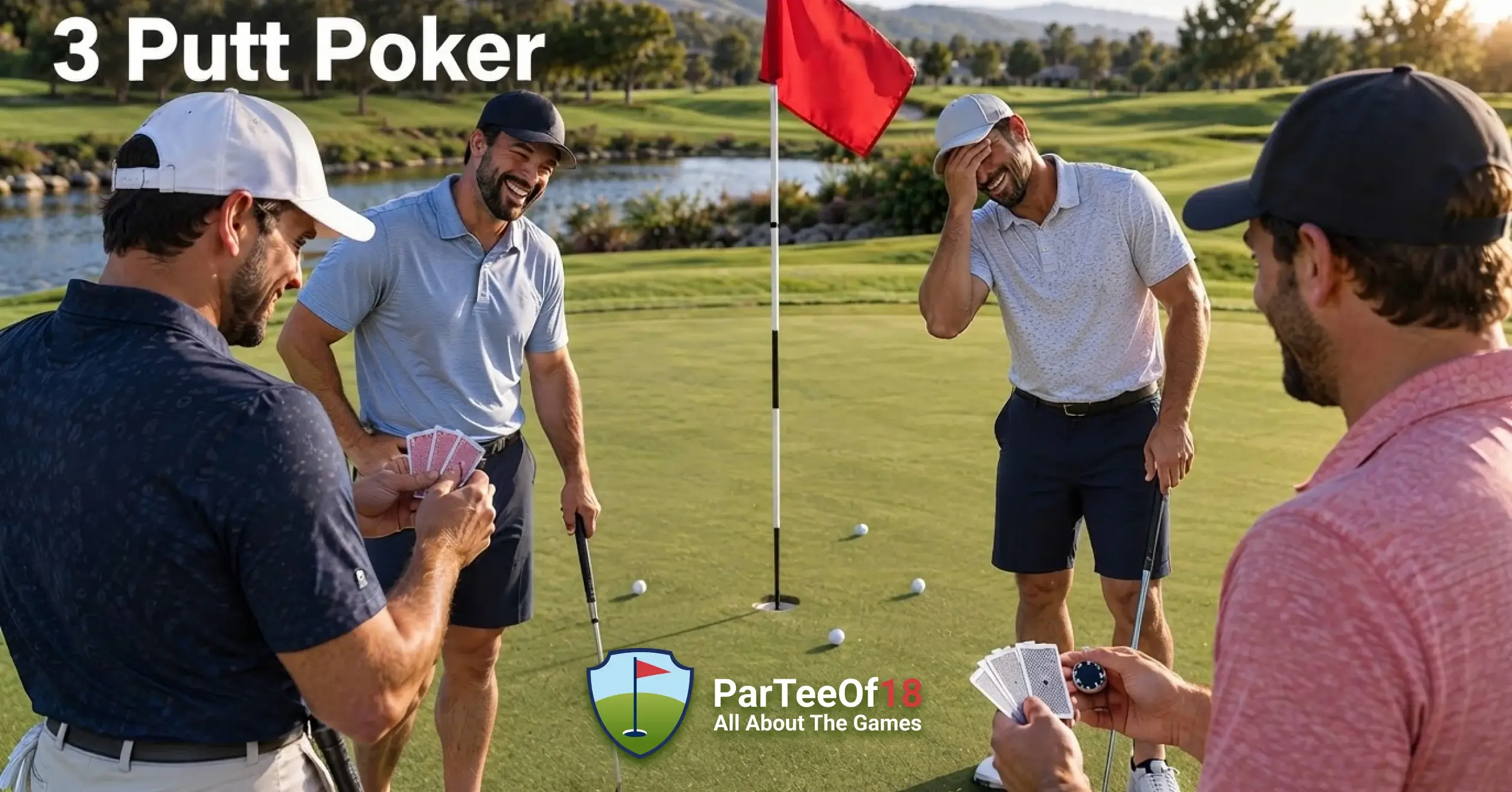
At the end of the round, the player holding the chip pays a final fee and everyone reveals their collected cards. The best 5-card poker hand wins the entire pot. The primary goal of this golf game is to combine putting performance on the green with a card game to build the best poker hand. Because 3 Putt Poker has several variations, agree on the card and penalty rules before the round starts.
You May Also Like: 7 Fun Golf Chipping Games to Make Your Short Game Better
Putting Drills to Sharpen Your Stroke
To sharpen your golf putting stroke, and make more putts, you can practice these proven drills that focus on starting the ball on line and controlling your speed. Here are three drills worth adding to your practice routine:
- The Tee Gate Drill: Place two tees slightly wider than your putter head and make practice strokes through the gate without touching either tee. This helps you build a more consistent stroke path and control the putter face.
- The Coin on the Putter Drill: Balance a coin on top of your putter head during your practice stroke. Make smooth strokes without letting the coin fall to improve your rhythm and stability.
- The Three-Foot Circle Drill: Place four tees around the hole, about three feet from the cup, and try to hole every putt. If you miss, start the challenge again. This builds confidence and consistency on short putts.
You can read our putting tips guide if you want to know more about the mechanics behind why and how these drills work in putting games.
Common Mistakes in Putting Games (and How to Fix Them)
There are some common putting mistakes in golf, but you can fix them with a few simple setup and stroke adjustments.
1. Incorrect Alignment: Setting up with the putter face aimed right, or left forces your brain to manipulate the stroke mid-swing.
- The Fix: Draw a thick line on your ball with a marker, or use your putter’s alignment aid to point directly at your starting target line. You can practice spot putting by picking a small target six inches ahead of the ball.
2. Improper Eye Position: Standing with your eyes too far inside or outside the ball can affect your target perception.
- The Fix: Position your eyes close to directly over the ball so you can see the starting line clearly. Check this by dropping a second ball from your eye line to see if it hits your setup ball or use a training mirror.
3. Deceleration Through Impact: Slowing down the putter head as it approaches the ball leads to poor speed control, pushed putts and an unstable clubface through impact.
- The Fix: Shorten your backstroke and focus on making a smooth stroke through the ball with your shoulders rather than trying to hit it with your hands. Let the putter continue naturally toward the target after impact. Think of it like a steady pendulum swing rather than a sharp hit.
4. Poor or Inconsistent Speed Control: Trying to hit the ball harder or softer instead of adjusting the length of your stroke ruins distance judgment.
- The Fix: Maintain the same smooth rhythm while lengthening or shortening your backswing to control distance.
Start Your Smarter Golf Journey Today!


FAQs
What is a good putting game to practice alone?
Around the World is a great solo putting game. Place four to eight balls in a circle around a single hole, starting about three feet from the cup. Putt each ball into the hole in sequence. If you miss any putt, you must start the entire sequence over from the first ball. A similar game, Around the Clock, places balls at clock-face positions around the hole and follows the same restart rule; both are worth adding to your solo practice routine.
How do you play Snake in golf?
Snake is a running putting game played during a round. The first player to three-putt takes the snake, often represented by a physical token or coin. If another player three-putts later in the round, the snake transfers to them. Whoever is holding the snake when the round ends pays the pre-agreed penalty according to the group’s rules.
How many putts should I be taking per round?
An average recreational golfer should aim for 32 to 36 putts per round, which averages out to two putts per hole. Scratch golfers typically average around 30 putts per round, while PGA Tour professionals average between 27 and 29 putts per round, achieved by hitting more greens in regulation and lagging long putts close.
What’s the difference between a putting game and a putting drill?
A putting game introduces scoring, pressure, and stakes to replicate on-course conditions. A putting drill isolates a specific mechanical flaw like tempo, alignment, or stroke path without focusing on a final score or outcome.
All Premium Features Unlocked
No catch. Cancel anytime




MacKenzie Tyler is a competitive golfer preparing to turn professional on the LPGA Tour. A former All-League golfer and three-sport athlete, Tyler spent nine seasons caddying at Sebonack Golf Club on Long Island, where she developed a thorough understanding of the game. In 2025, she won the Long Island Amateur at -4 over 36 holes, qualified for the U.S. Mid-Amateur, and became the first alternate at her U.S. Women's Open qualifying site after leading the field through round one.


Related Posts

What Is a Chip Shot in Golf? How to Hit It and When to Use It
Learn what a chip shot is, when to chip vs. pitch vs. putt, and how to hit it clean. Simple...

What Is Lag Putting? (And the 3 Drills That Actually Fix It)
Learn what lag putting means, why distance control matters, and three practical drills to help reduce three-putts and improve your...

What Is PCC in Golf? Playing Conditions Calculation Explained
PCC is the daily adjustment that corrects your score differential when a course plays easier or harder than its rating....

What Is a Fairway in Golf? Definition, Why Position Matters, and How to Hit More of Them
A fairway is the closely mown grass between tee and green. Learn what counts as one, how FIR works, and...