
 MacKenzie Tyler
 February 26, 2026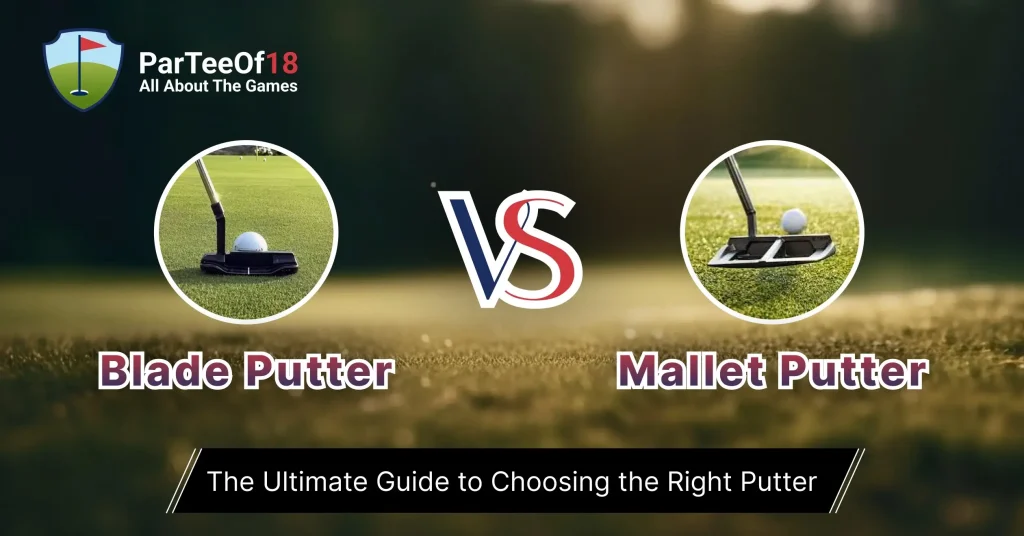
 Last Updated: July 3, 2026


When golfers talk about blade vs mallet putters, what they really want to know is which one will help them make more putts. Both styles have won big tournaments. Both have fans who are very loyal. Both of these putters can have a big effect on how confident you feel on the greens.
A quick glimpse shows that mallet putters are usually more forgiving and stable, especially on longer putts. Blade putters, on the other hand, give you better feel and accuracy, which is what players with an arc stroke who want to be accurate inside 10 feet prefer.
Understanding the difference between mallet vs blade putters matters as putting can nearly make 40% of your total strokes in the round. A putter that fits your stroke can improve alignment, consistency, and even strokes gained. The wrong one? It quietly costs you three to five shots every single round.
Why Choosing the Right Type of Putter Matters?
Your putter is not just another type of golf club; it is your scoring weapon that directly impacts the accuracy, confidence, and consistency, with putting accounting for roughly 40-50% of your total strokes. The right design improves alignment, stabilizes your stroke, and gives feedback you can trust, through feel, sound, and visual cues that are needed to sink more putts and reduce frustration from three-putts.
On the other side, using the wrong putter style can create subtle compensation patterns, which often lead to inconsistency. You might find yourself manipulating your stroke, adjust your grip pressure, or lose confidence over short putts, which directly create an impact on your overall performance.
The cost of using the wrong putter style:
- Poor distance control on longer putts
- Lack of confidence inside 6 feet
- Inconsistent face control at impact
- Compensations that affect your natural stroke
- Increased three-putts from misalignment
The debate isn’t just philosophical, shot-tracking data from tens of thousands of real rounds gives us a clearer picture. For most amateur golfers, mallets hold a meaningful edge inside six feet, where make percentage and confidence matter most. From 10 feet and beyond, however, blades tend to perform better on distance control and lag putt proximity, which is exactly why golfers with a consistent arc stroke often feel more in control with a blade from longer range.
The bigger finding from real-world data isn’t even about putter style — it’s about fit. A large portion of recreational golfers are using a putter that works against their natural stroke, not with it. And the performance gap between a well-matched putter and a mismatched one is far larger than the gap between any two putter shapes. That’s the real reason choosing correctly matters more than the blade-or-mallet debate itself.
Blade vs Mallet Putter At a Glance
| Feature | Blade Putter | Mallet Putter |
|---|---|---|
| Head Size | Small, compact | Large, extended rear |
| MOI (Forgiveness) | Lower (~5,000–5,500 g/cm²) | Higher (~6,500+ g/cm²) |
| Best Stroke Type | Arc / Toe-hang | Straight-back, straight-through |
| Sweet Spot | Smaller, heel-biased | Larger, center-facing |
| Feel & Feedback | High — punishes mishits | Muted — absorbs mishits |
| Alignment Aids | Minimal (single line or dot) | Bold (lines, dots, T-shapes) |
| Distance Control | Superior on long putts | Better consistency inside 6 ft |
| Best For | Consistent, skilled players | All levels, especially beginners |
| Typical Build | Single-piece milled metal | Multi-material composite |
What is a Mallet Putter?
A mallet putter is a larger-headed type of a putter with perimeter weighting and an extended rear section, designed to deliver higher forgiveness and stability than a blade especially on off-center hits.
Mallet putters are usually made from a composite of materials, containing lightweight metals such as titanium or aluminum, and heavier tungsten weights to optimize weight distribution for greater forgiveness and stability. Think of models like the TaylorMade Spider Tour, PXG Battle Ready Bat Attack, or Odyssey 2-Ball Ten.
Most of the mass of the weight distribution sits low and deep in the head, increasing the Moment of Inertia (MOI). Higher MOI and deep center of gravity mean this putter is ideal for golfers with a straight-back-straight through strokes and resists twisting on off-center strikes. This design maintains face-balanced, high stability, and better distance control for golfers whose club face faces upward when balanced on the finger, and is ideal for golfers with little to no arc in their stroke.
Another major advantage is alignment aids, which are large, often elongated, and have heads that allow for better alignment lines to help with accuracy. Mallets often feature bold lines, contrasting colors, or multi-material visual guides. The Odyssey 2-Ball, for example, uses two white discs to frame the ball, helping players square the face instinctively.
Pros of a Mallet Putter
- Strong forgiveness on off-center hits
- Strong alignment aids
- Improves stability through impactṣ
- Better performance on long-putts
- Ideal for straight-back, straight-through strokes
Cons of Mallet Putter
- Bulky, sometimes distracting appearance at the address
- Lack of feel or feedback on impact
- Reduced distance control on fast greens
- Not ideal for arc strokes
What Is a Blade Putter?
A blade putter is a compact, narrow-headed putter built for feel, precision, and golfers with an arc-style putting stroke. It is the traditional putter shape that has been used at the highest level of the game for decades, and the design has barely changed because it does not need to. Blade putters tend to be milled from a single piece of metal, like stainless steel, brass, or carbon steel, for maximum feel and feedback. Popular examples include the Scotty Cameron Newport 2, Ping Anser, and Titleist Scotty Cameron Special Select, as this design has influenced generations.
Blades are typically narrower, with the weight distributed toward the heel and toe. Traditional blades often have toe hang, making them ideal for golfers with an arcing stroke. Double-wide blades, such as Odyssey Double Wide, offer a slightly larger profile and more stability while retaining a classic appearance.
Where blades truly shine is feel. The thin, long profile and heel-shafted weighting give you great feedback and precise control, which is why we emphasize it in our putting tips. A blade won’t cover up your mistakes. If you hit it off the toe, you’ll feel the vibration all the way up the shaft, and the ball will stop halfway to the hole. You can’t hide it. But for skilled players, being honest builds trust, especially when you’re within eight feet, where accuracy is most important.
Pros of a Blade Putter
- Superior feel, feedback, and distance control
- Ideal for arc strokes
- Offers a cleaner, less obstructed view of the ball
- High maneuverability and control for faster greens
- Lighter, smaller head; easy for face rotation to square at impact
Cons of Blade Putter
- Less forgiving on off-center hits due to lower MOI
- Difficulty in aligning due to the minimalist design
- Reduced stability for golfers with inconsistent strokes
- Requires higher, consistent stroke mechanics
Mallet Putter vs Blade Putter: Key Differences
The choice between mallet vs blade putters comes down to design philosophy, personal preference, and stroke compatibility. Let’s break down the key differences.
Design and Construction
Mallet putters have large heads made with multi-materials to make them as stable and forgiving as possible. Blade putters, on the other hand, have a small, traditional design that has been around for decades. They are usually made from a single block of steel and are focused on feel and simplicity, with weight concentrated in the heel and toe.
Weight Distribution and MOI
The heads of mallet putters are bigger, and the weight is spread out to the edges and back. This gives them a high MOI (usually 6,500 g/cm² or more) and makes them less likely to twist, which makes the putter more stable and forgiving. Instead, blade putters take into account weight that is concentrated near the face (heel to toe). This gives them a low MOI (about 5,000–5,500 g/cm²) but makes them more responsive and better at managing speed and touch on greens.
Stroke Compatibility
In mallet putters, a design with high stability and a balanced face is best for straight-back-straight-through strokes. On the other hand, blade putters are better for arc-style strokes because their toe-hang makes the club face open and close.
Sweet Spot and Forgiveness
Mallet putters are better because they are more forgiving. This means that they are better at lowering penalties for hitting off-center because they have a higher MOI and perimeter weighting, which makes the sweet spot bigger and more consistent. Because blade putters have a smaller sweet spot, you need to hit the ball more accurately and consistently.
Alignment Aids
As you know, mallet putters have big, deep heads; they are great for golfers who need help with their aim. They have better, more visible alignment aids like long lines, multiple dots, and T-shapes. Blade putters usually only have one line or dot, which is good for players who like to use their intuition, feel, and a more traditional setup.
Feel and Feedback
A blade is like a microphone for your hands. If you miss it a little on the toe, you’ll feel it right away. That sharp feedback helps good players make changes quickly. A mallet is more like noise-cancellation headphones. It keeps the head steady and makes it easier to hit the ball when you miss. You get forgiveness, but you lose some of the raw, detailed connection you had with the strike.
How to Choose Between a Blade vs Mallet Putter?
Choosing between a mallet vs blade putter is not about trends; it’s about fit, so it’s important to know how to decide which putter is best for your game. Here are some questions you should ask when deciding between a blade vs mallet putter.
What putting stroke do you prefer?
If your stroke is straight back, straight through, a face-balanced mallet may improve consistency, but if you want to create an arc naturally, a toe-hang blade might complement your motion better.
How consistent are you?
If you miss the center of the face frequently, a high MOI offers forgiveness; on the contrary, a blade can maximize the feel and accuracy if your contact is consistent.
What are your course conditions?
Fast greens often reward with a delicate feel and favoring blades, whereas for a mallet putter, slower greens might benefit from the roll consistency and stability.
What visual style do you prefer?
Some golfers may gain confidence from bold alignment aids, while others might prefer a clean, minimalist blade look. Confidence at address matters more than most golfers realize.
Not Sure About Your Stroke Type? Look at Where You Miss
Most golfers don’t have a launch monitor at home, and not everyone has had a formal putter fitting. If you’re unsure whether your stroke is straight or has an arc, your miss pattern is the most honest clue you have.
You’re likely missing to the right (for right-handed golfers): Your face is open at impact. This usually means your stroke has more of an arc but your putter isn’t rotating to match it. A toe-hang blade or a toe-hang mallet gives the face room to close naturally.
You’re missing to the left consistently: Your hands are getting too active and closing the face early. A face-balanced mallet stabilizes the face through impact and reduces that tendency. The head does the work, so your hands don’t have to.
You’re hitting it close but losing distance on longer putts: Your contact is decent, but your speed control is inconsistent. This often points to a mallet’s muted feedback working against you on lag putts. A blade may give you the feel connection you need to judge distance better.
You’re generally close on direction but missing short putts: This is a classic sign of alignment breaking down under pressure. A mallet’s prominent alignment aids can help square the face instinctively before you take the stroke.
Your miss pattern won’t tell you everything, but it narrows the field fast. Combine it with your stroke type and course conditions, and the right putter choice becomes a lot more obvious.
How to Choose a Putter Based on Your Putting Stroke?
The type of stroke you use is more important than just the shape of your putter. Face-balanced designs, which are common in mallets and some double-wide blades, go well with a straight-back, straight-through stroke. These putters don’t let the face rotate, which helps you keep it square.
If you have an arc stroke, toe-hang designs, which are common in traditional blades, let the face open and close naturally. A slight arc works better with moderate toe hang, but a strong arc needs more toe hang to rotate properly.
As your arc gets bigger, your face rotation becomes more obvious. Matching your toe hang to your arc stops manipulation and encourages a natural release. When your putter works well with your stroke, it feels easier to line up, the impact feels solid, and you naturally feel more confident.
Start Your Smarter Golf Journey Today!


FAQs
What pros prefer between blade vs mallet putters?
PGA Tour pros are choosing mallet putters as they are more stable, have a higher moment of inertia (MOI), and help with alignment. Over 70% of the best players in strokes-gained metrics use them often. Scottie Scheffler, Rory McIlroy, and Jon Rahm are just a few of the well-known players who have switched to mallet-style putters to play better.
Are blades actually harder to hit?
Yes, blade putters are usually harder to hit consistently than mallet putters because they have a lower Moment of Inertia (MOI) and a smaller sweet spot. They feel better and, for some skilled players, also help with distance control, but they twist more when you hit them off-center and are harder to line up.
When should a golfer switch to blades?
A golfer should switch to blades when they hit the center of the clubface 8 to 9 times out of 10 and want to shape their shots, control their trajectory, and feel the club better than they want to be forgiving. Most of the time, this fits into a handicap range of 0 to +5, but some mid-handicappers who hit the ball well may find the feedback helpful.
Who Should Use a Blade Putter?
Most of the time, blade putters are best for more experienced golfers or “purists” who have a steady, arcing stroke and don’t need the help of a bigger mallet to line up their shots.
What is the MOI difference between a blade and mallet putter?
MOI measures how much the putter head resists twisting on off-center hits. Blade putters typically sit in the 5,000 to 5,500 g/cm² range, while mallets regularly exceed 6,500 g/cm². That gap means a mallet stays far more stable when you miss the sweet spot. Blades twist more but give you sharper feedback on every strike, which skilled players use to judge pace and distance.
Is a mallet or blade putter better for high handicappers?
A mallet is the better starting point for most high handicappers. The higher MOI, larger head, and bold alignment aids cover the two biggest putting problems at that level: off-center contact and misalignment. Blade putters reward a consistent, repeatable stroke. If you are still building that, a mallet protects your score while you do.
Should I get a blade or mallet putter?
If you have a straight-back, straight-through stroke and miss putts off-center regularly, go with a mallet. If your stroke has a natural arc and you already make consistent contact, a blade will give you better feel and control. When in doubt, a mallet is the safer starting point for most golfers.
All Premium Features Unlocked
No catch. Cancel anytime




MacKenzie Tyler is a competitive golfer preparing to turn professional on the LPGA Tour. A former All-League golfer and three-sport athlete, Tyler spent nine seasons caddying at Sebonack Golf Club on Long Island, where she developed a thorough understanding of the game. In 2025, she won the Long Island Amateur at -4 over 36 holes, qualified for the U.S. Mid-Amateur, and became the first alternate at her U.S. Women's Open qualifying site after leading the field through round one.


Related Posts

ParTeeOf18 vs 18Birdies: Which Golf App Is Better for Your Group?
Compare ParTeeOf18 vs 18Birdies on scoring, handicaps, game formats, stats, GPS, leaderboards, and group features to find the right golf...

Gross vs Net Golf: What Each Score Means and How to Use Both
Gross vs net golf explained simply. Learn what each score means, how to calculate both, and which one counts in...

Handicap Index vs Handicap: What’s the Difference and Why It Matters
Handicap index vs handicap aren't the same. Learn the difference, how course handicap is calculated, and which number to use...
Graphite vs Steel Shafts: Which Is Better for Irons?
“Graphite is only for seniors and beginners.” If you still believe that, you’re missing out on some of the biggest...