
Step onto any golf course, and you’ll quickly realize no two rounds ever feel the same. One day you’re battling the wind on an open layout, the next you’re threading shots through tree-lined fairways. That’s the beauty of the game as it constantly changes with the course beneath your feet.
Understanding the different types of golf courses is the key to mastering varied terrain and choosing the perfect destination for your next round. In this complete guide, we’ll break down every layout and setting you’ll encounter on the circuit, ensuring you’re prepared for whatever the groundskeeper throws your way.
Understanding What is a Golf Course?
A golf course is a large outdoor area designed specifically for playing the sport of golf. It consists of a series of holes, typically 9 or 18, each featuring a starting point (tee), a maintained-grass pathway (fairway), and a finishing area (green) marked by a flag. Players aim to hit a ball into each hole using as few strokes as possible.
A standard golf course includes various terrain features, such as bunkers (sand traps), water hazards (ponds or streams), and rough areas with longer grass, all of which add challenge and strategy to the game. Golf courses are specifically landscaped and maintained to balance difficulty, aesthetics, and playability.
Golf courses can vary widely in size, design, and difficulty, ranging from simple public layouts to highly exclusive championship venues. They are often set in scenic environments and may include additional facilities like clubhouses, practice ranges, and pro shops.
Different Areas of a Golf Course
To keep your golf game (and your score) on track, you need to know the five main areas of the course. Each spot has its own set of official rules for how you play the ball.
- The Teeing Area: The starting point of each hole. You’ll set up between two markers to take your very first shot of the hole.
- The General Area: The largest part of the course. It covers the fairway (the short grass) and the rough (the thick, tall grass) where you spend most of your time playing.
- The Putting Green: The finish line. This is the ultra-smooth grass where the hole and flag sit, specifically prepped for putting.
- Bunkers: These are those sandy pits meant to trap your ball. They’re tricky because you usually can’t touch the sand with your club until you actually swing.
- Penalty Areas: The “danger zones” marked by red or yellow stakes. If your ball lands in the water or deep woods here, you’ll likely take a penalty stroke to get back out.
Types of Golf Courses Based on Landscape and Geography
Here is a breakdown of the different types of golf courses to help you understand how landscape shapes the game. Each type of golf course offers a unique challenge which is shaped by its geography, and the professional tournaments that define it.
Links Courses
The link courses are the oldest, built on coastal “linkland” in Scotland and Ireland. These tracks feature sandy soil, massive natural dunes, and very few trees. Because they are right on the ocean, wind is a constant factor, and the ground stays firm and fast-running. Additionally, in terms of accessibility, links courses offer a unique mix; many of the most famous are Public or Municipal (owned by the local community), while others are Private Members’ Clubs that allow limited visitor tee times, or Resort properties that prioritize hotel guests.
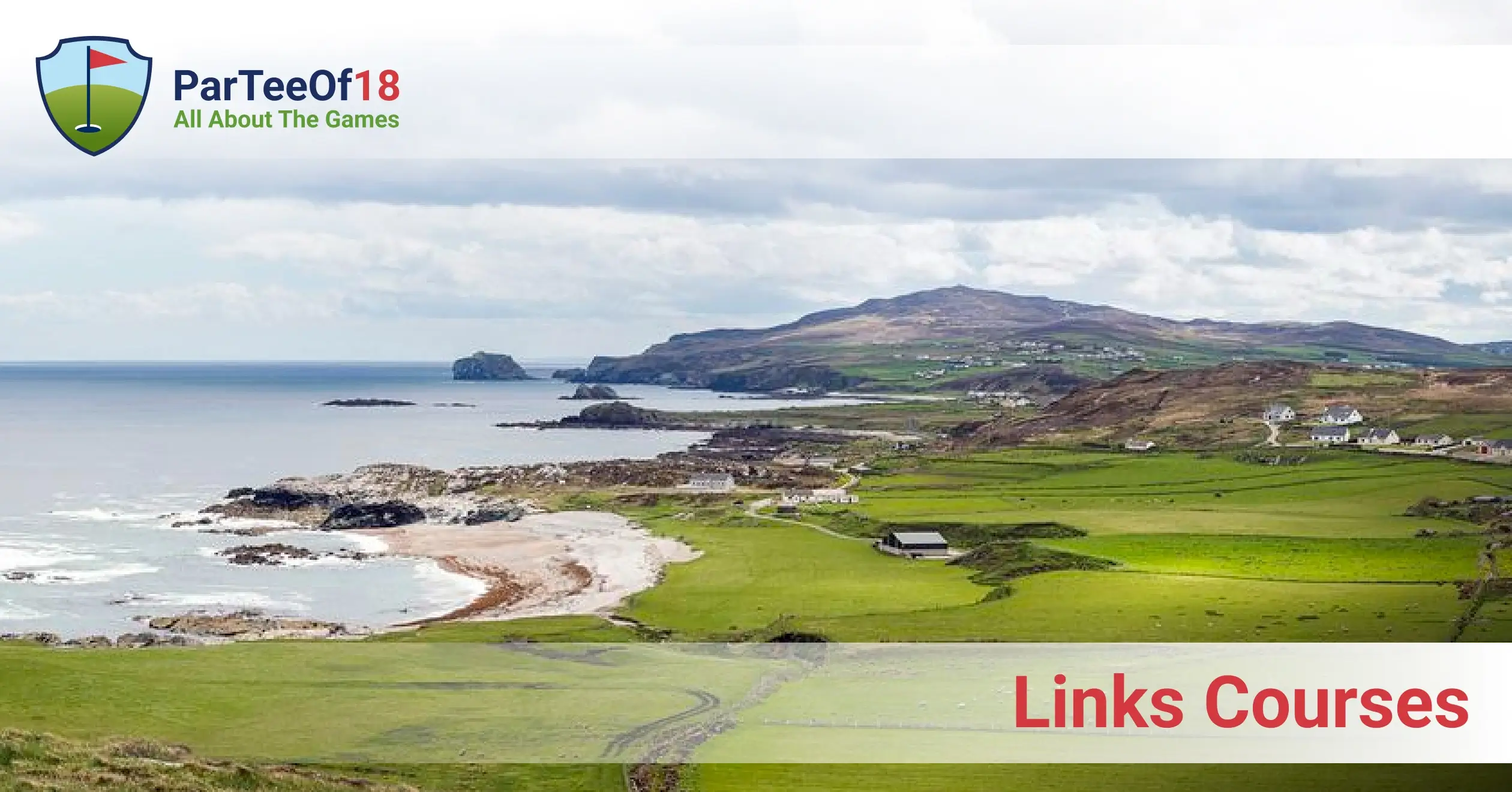
Major Tournaments: The Open Championship (British Open) is the only major tournament played exclusively on links courses. It rotates through legendary venues like the Old Course at St. Andrews, Royal Troon, and Carnoustie. The Pennard Golf Club is a private club that hosts annual events, including the Spring Seniors’ Open, which draws competitive senior golfers from across the region.
Checkout Detailed Guide: Links Golf Course: Everything That Makes These Coastal Courses Unique
Parkland Courses
Common across the US and Europe, parkland courses look like well-kept, inland parks. They are characterized by lush green grass, tall trees, and man-made hazards like ponds. The turf is generally softer, which means the ball stops quickly rather than rolling out.
Accessibility for this type of golf course spans the entire spectrum, with many being strictly Private clubs with high initiation fees, while others are public or municipal courses managed by cities. Many high-end parkland tracks are Resort or Semi-Private, offering a luxury experience to hotel guests or daily-fee players. These courses are the standard for professional tour stops, including the PGA Championship, the Ryder Cup, and various PGA Tour events.
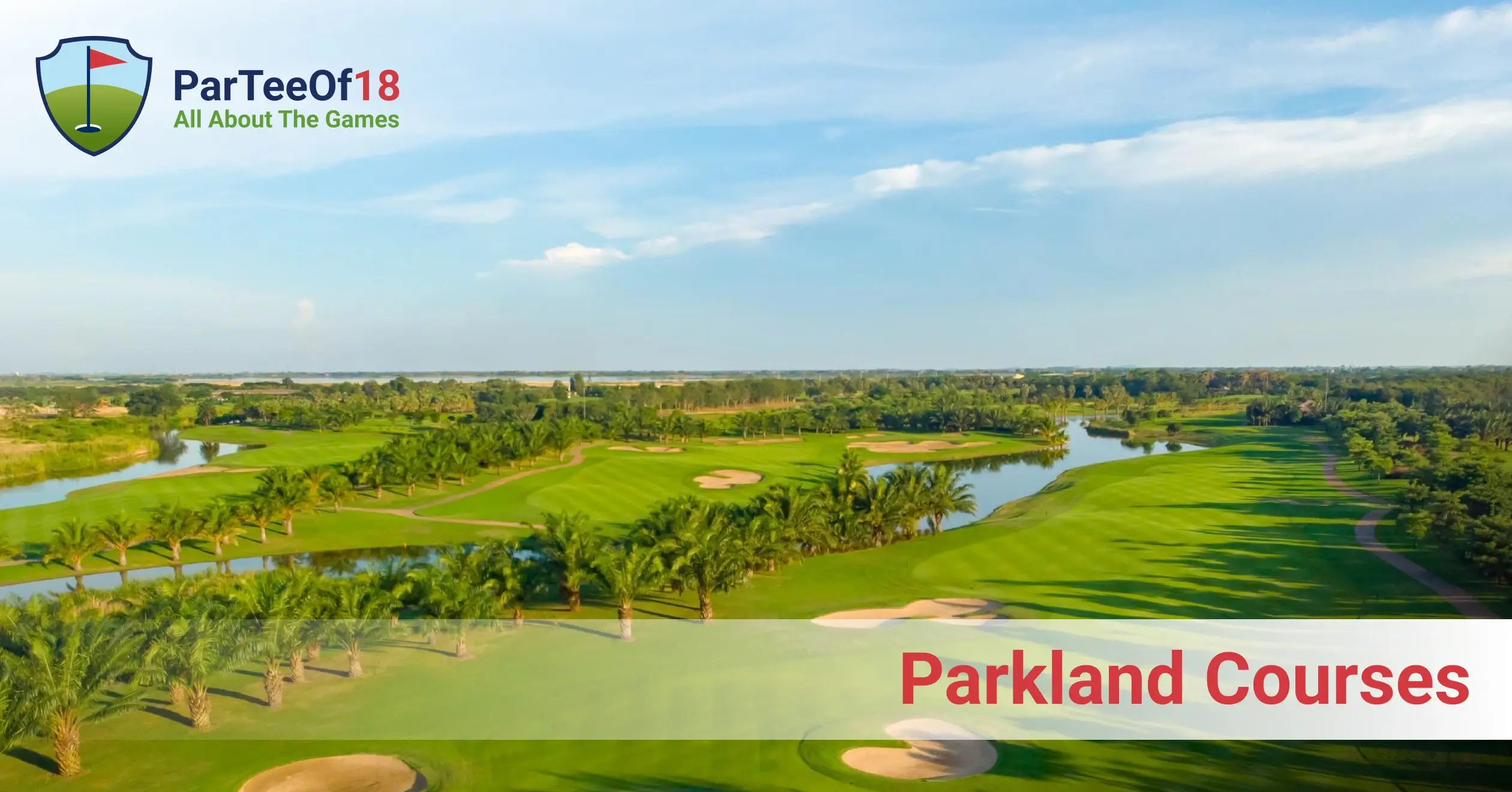
Major Tournaments: This is the most common style for the PGA Tour. The Masters at Augusta National sets the gold standard, while parkland icons like Winged Foot and Oakmont also host the U.S. Open.
Checkout Detailed Guide: Parkland Golf Course: Everything You Need to Know
Heathland Courses
Mostly found in the UK, these inland courses sit on sandy, acidic soil. They aren’t as heavily wooded as parkland courses but are famous for being surrounded by heather, gorse, and rugged shrubs. They offer excellent drainage and a natural, “wild” feel.
While many are Private Members’ Clubs, they aren’t totally off-limits. Most top UK heathland spots use a “Visitor” model, meaning you can book a tee time as a Public player, usually on weekdays. Weekends are mostly for members, though you can sometimes snag an afternoon slot if you’re willing to pay a premium. Just a heads-up; green fees at elite places like Sunningdale or Walton Heath are steep, typically running approximately between £275 and £450+ per round.
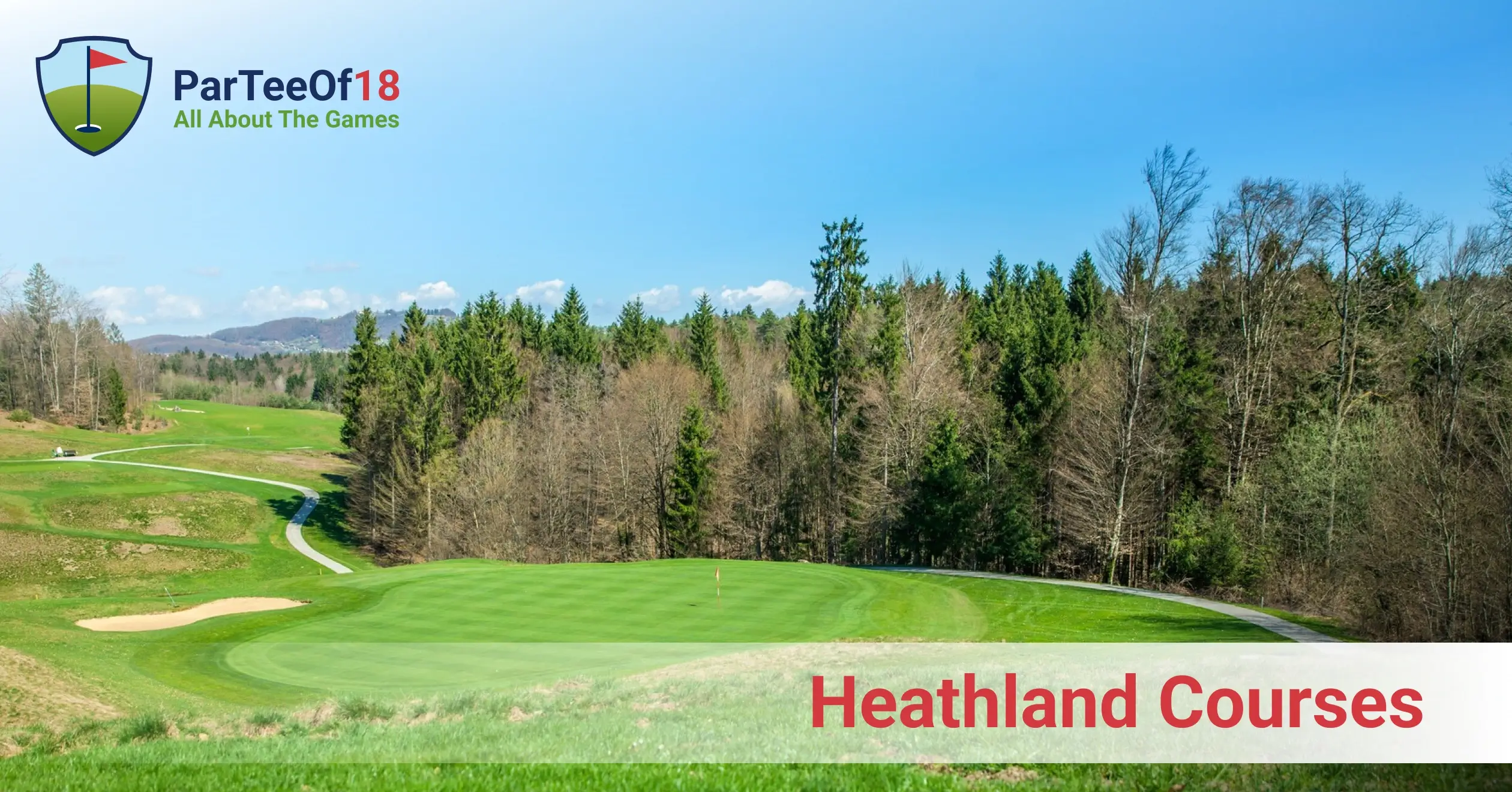
Major Tournaments: These are staples for the European Tour, specifically the BMW PGA Championship at Wentworth. The Sunningdale Golf Club recently hosted the AIG Women’s Open and the Senior Open.
Checkout Detailed Guide: Heathland Golf Course: The Complete Guide to Golf’s Hidden Masterpiece
Sandbelt Courses
The Sandbelt courses are a unique cluster of world-class tracks located in a small region southeast of Melbourne, Australia. They sit on a prehistoric “sandbelt” of deep, free-draining soil that allows for firm, fast turf and dramatic, jagged-edge bunkering, a style pioneered in the 1920s by legendary architect Alister MacKenzie.
While most of these are strictly Private Members’ Clubs, they offer a “visitor” model similar to the UK, allowing Public access to international travelers on specific weekdays (usually Monday–Thursday) for a high green fee. These courses are the regular home of the President’s Cup, the Australian Open, and the ISPS Handa Australian Open.
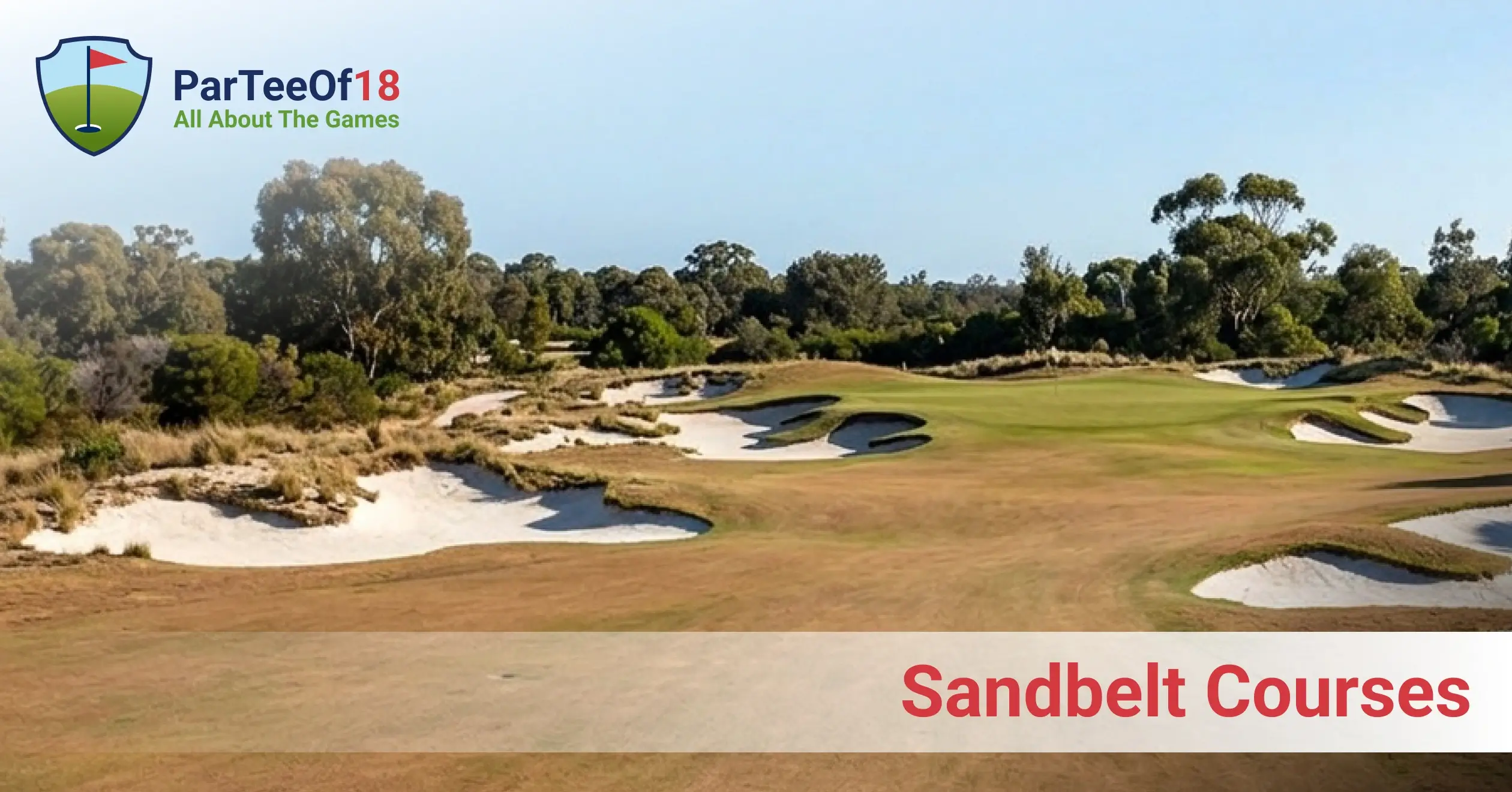
Major Tournaments: The Presidents Cup is held at Royal Melbourne and is consistently ranked as the best course outside the U.S. Other major events like the Australian Open frequently visit sandbelt gems like Kingston Heath or Victoria Golf Club.
Desert Courses
Popular in Arizona, Nevada, and Dubai, these courses look like vibrant green ribbons cutting through the sand. You’ll play on perfectly manicured grass for the fairways and greens in regulation, but if your shot goes offline, your ball ends up in the natural desert scrub or cacti.
Most desert courses are built for tourism, so you’ll mainly find Resort or Public setups. While there are ultra-exclusive private clubs, the big-name tracks are usually Daily-Fee, meaning anyone can play if they pay the green fee. These prices swing wildly as you might pay $300–$600 in the winter peak, but those same rounds can drop below $75 in the summer when the heat kicks in.
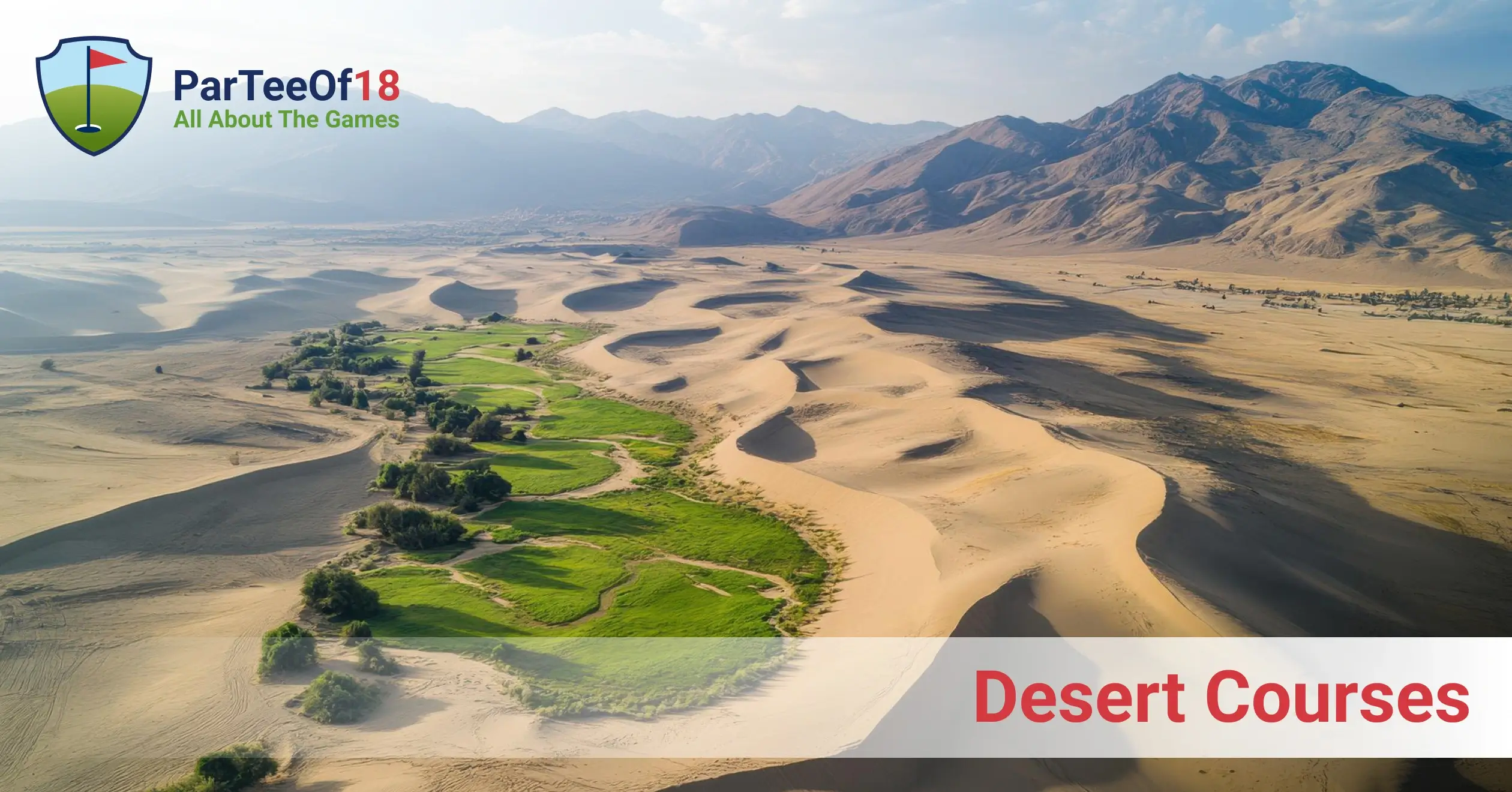
Major Tournaments: Desert golf is a core part of the PGA Tour’s early-season “West Coast Swing,” headlined by the WM Phoenix Open at TPC Scottsdale. The Dubai Desert Classic is another flagship event on the DP World Tour.
Moorland Courses
Typically located in high-altitude or upland areas of the UK, these courses feature wide-open spaces and peaty soil. This course feels similar to heathland courses, but is generally wetter and more exposed to the elements, characterized by deep grasses and purple heather.
The access of this golf type is predominantly Public or Semi-Private; many are traditional clubs that offer affordable daily-fee play to any golfer. While some are Private Members’ Clubs, they typically lack the rigid visitor restrictions found at elite links or heathland venues, allowing public bookings most days of the week. Because of their remote locations and softer turf, they rarely host major professional tours, instead serving as the backbone for Regional Amateur Championships, PGA EuroPro Tour events, and the English Amateur.
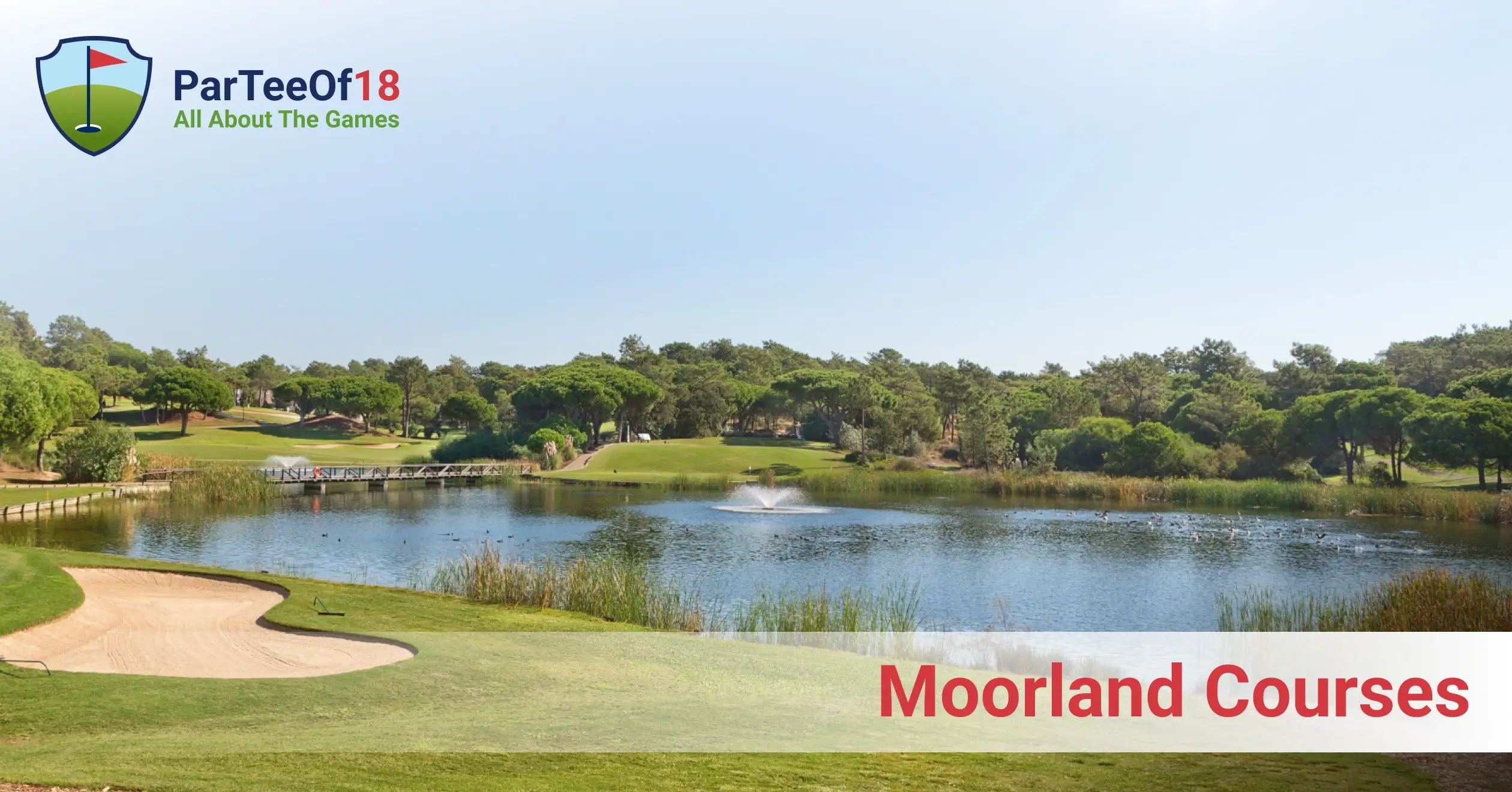
Major Tournaments: While less common in the four modern majors, the Scottish Open has historically used moorland-influenced venues, such as the King’s Course at Gleneagles, on eight occasions. In contrast, Legends Golf Resort is not a traditional major venue, but as a Pete Dye design recognized among “America’s 50 Toughest Golf Courses,” it is frequently ranked among the best public-access courses in South Carolina and often hosts large amateur tournaments.
Types of Golf Courses Based on Design
In terms of duration and level of competition, there are different types of golf courses designed for different reasons. This is an outline of the types of golf courses by design.
Executive Courses
The executive golf courses are efficient in both time spent and length. This type of golf course features both par 3 holes and some short par 4 holes.
This type of golf course suits players whose main reason for playing golf is to spend less time while maintaining a real golfing experience. Additionally, because of its efficient design, this type of golf course is suitable for beginners and casual players.
This golf course has access that is almost exclusively Public or Municipal, as these courses are built to be community-friendly and affordable. Some are located within Resorts or Semi-Private residential communities, providing a quick alternative to a full-length championship course.
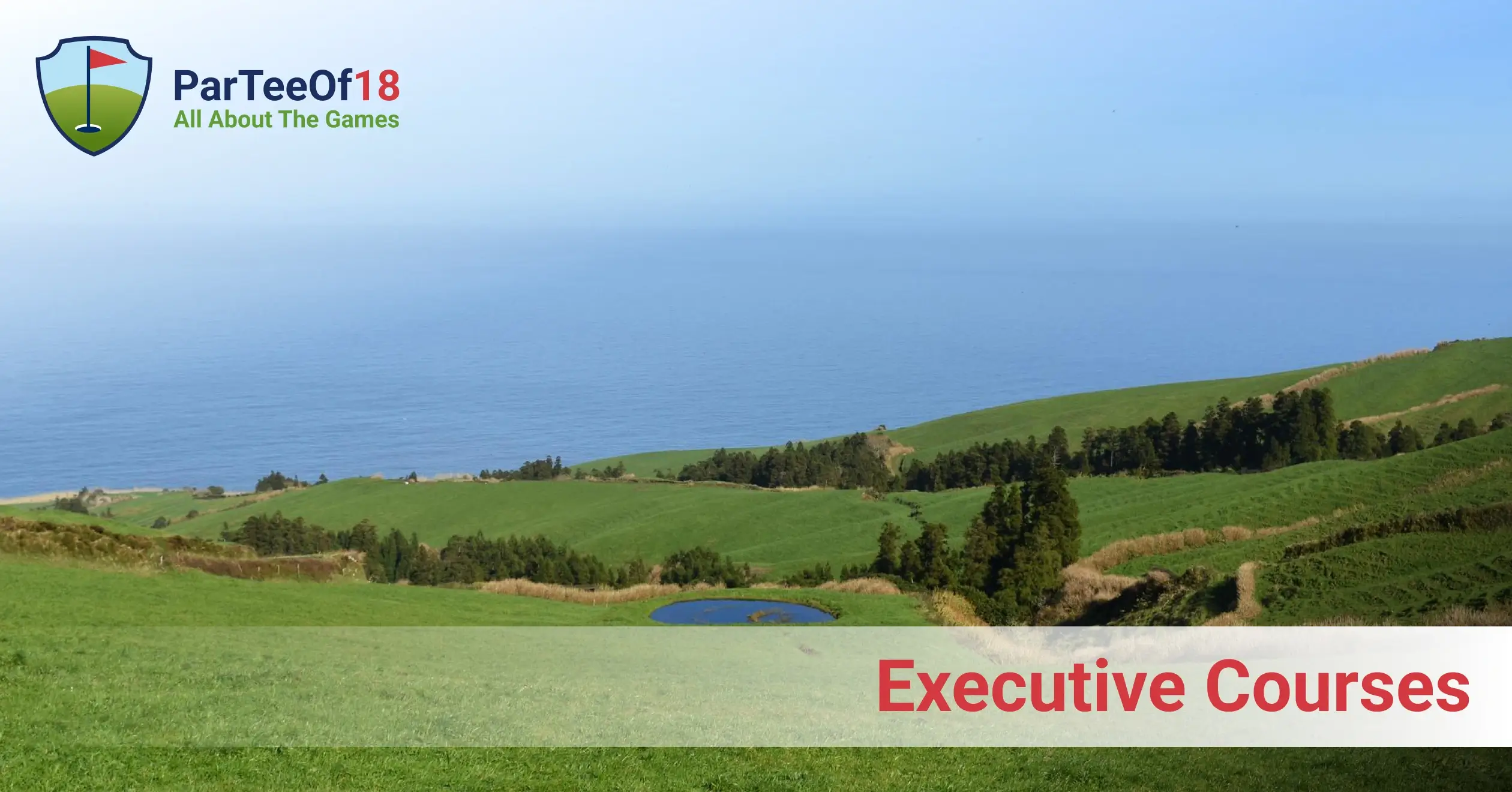
Famous Examples: The Cradle at Pinehurst, a high-end resort, has hosted numerous PGA Junior League events; Audubon Park Golf Course, a Public municipal course located in New Orleans, frequently hosts local amateur championships.
Checkout Detailed Guide: What is an Executive Golf Course? The Complete Guide
Par 3 Courses
This is a golf course with holes that entail a par 3 only. It is one of the most efficient in terms of length among conventional golf course types.
The focus in this type of golf course is mainly on the short game, and therefore, it requires good pitching and putting skills. This type of golf course is designed for beginners and a quick practice option for experienced players. This golf course type has overwhelmingly Public or Municipal access, as these are often community-run facilities designed for high-volume play.
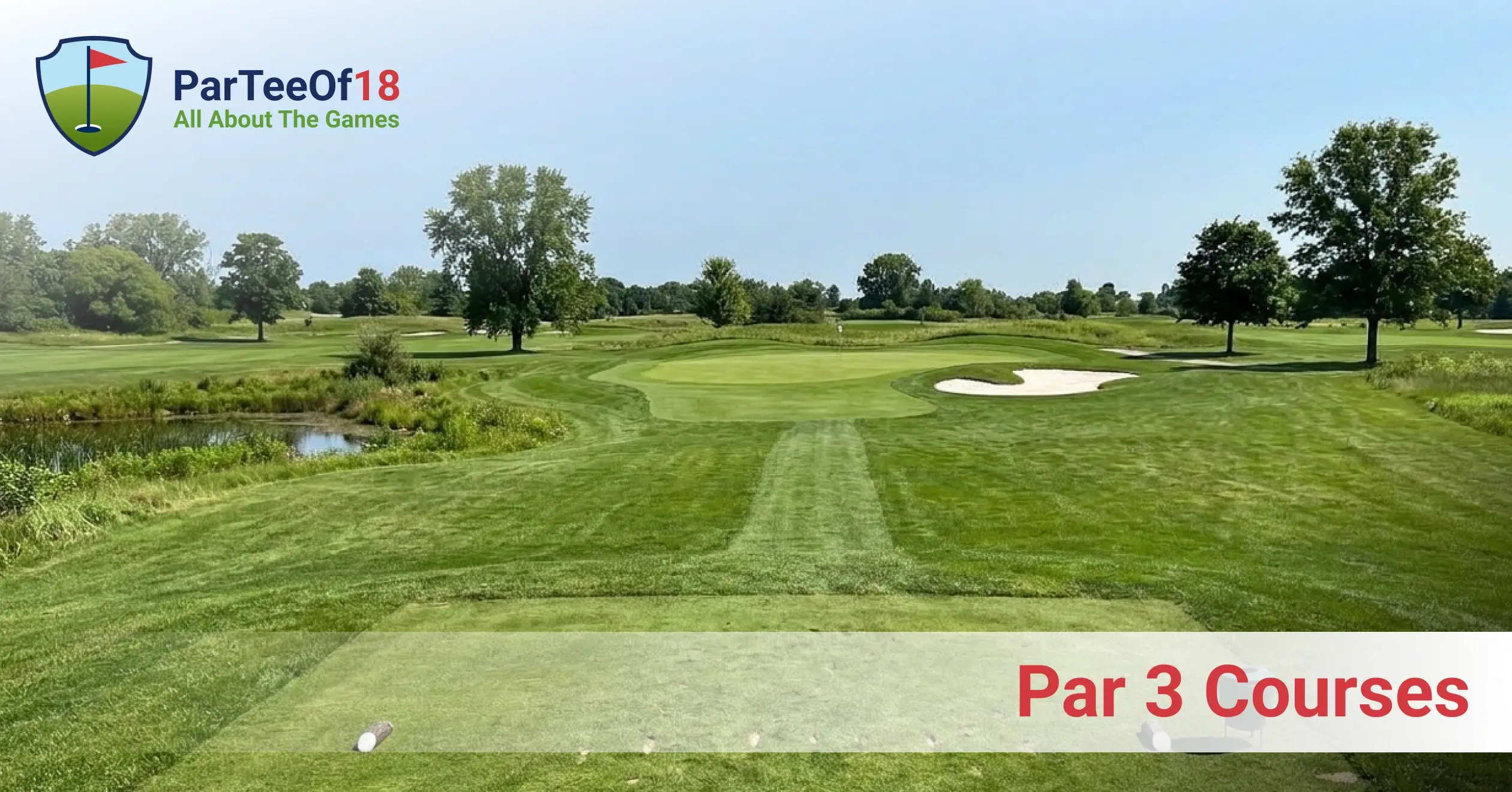
However, a growing trend has seen elite resorts and private clubs build high-end par-3 “short courses” as secondary amenities for their guests and members. While they do not host major professional tour events, they are the primary venues for Junior Golf Championships, Drive, Chip, and Putt Regionals, and most famously, the Masters Par 3 Contest.
Checkout Detailed Guide: What is a Par 3 Golf Course? The Complete Guide
Championship Courses
A championship course is a design intended to host professional events. It is a full-length course with longer yardage and a difficult layout, featuring par in golf, such as par 3, par 4, and par 5 holes. Furthermore, the dominant access model for these venues is private, as most top-tier championship courses require membership or a guest invitation. While many famous “bucket list” tracks are Resort or Public (like Bethpage Black or Pebble Beach), these are the exceptions.
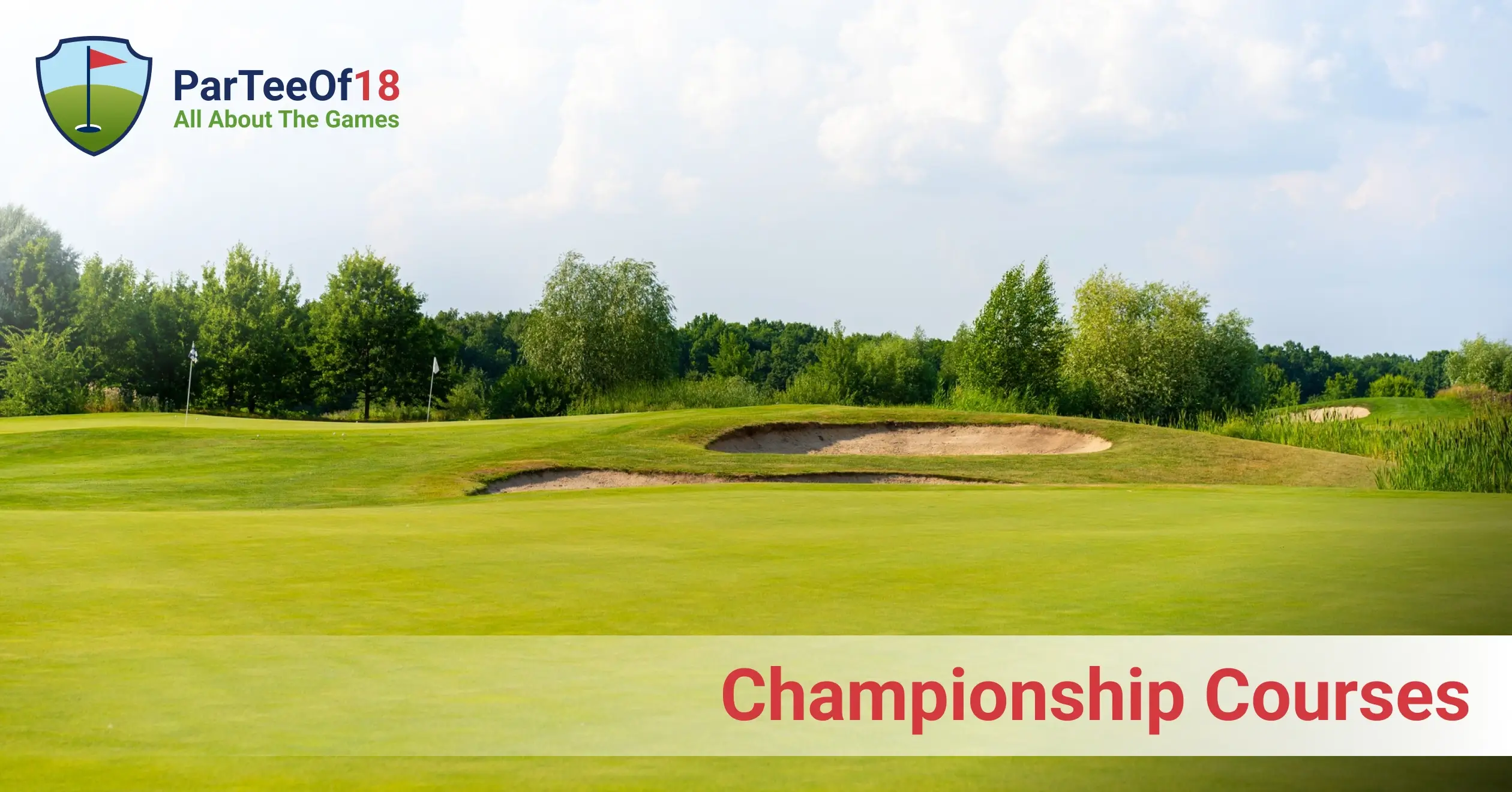
The course demands accuracy, skill, and consistency, which makes it a good choice for expert players. Of all the golf course types that exist, this type represents the test of the sport at its best.
Stadium Courses
A stadium course is designed with the spectator in mind. This course may include natural or artificial mounds that offer spectators great viewing points as they watch their favorite players compete.
It is a perfect choice for hosting major competitions, due to its ability to incorporate features that enhance competitiveness while still providing an exciting spectator experience. Additionally, access to the most iconic stadium courses is primarily Public/Resort, as they were largely pioneered by the PGA Tour’s “Tournament Players Club” (TPC) network to ensure fans could play the same tracks as the pros. These venues are the permanent or frequent hosts of high-profile events such as The Players Championship, the WM Phoenix Open, and various PGA Tour Playoffs.
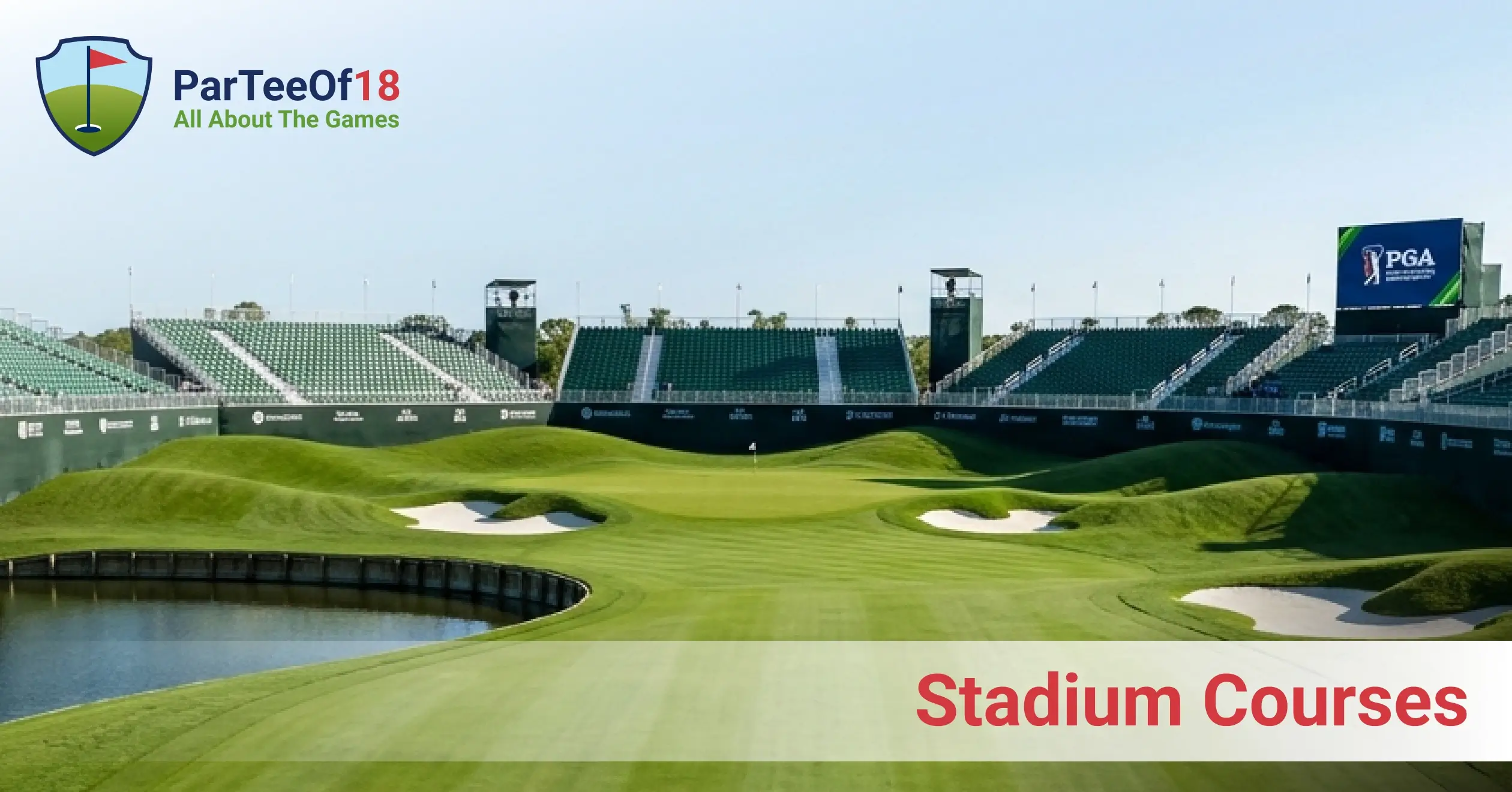
Famous Examples: TPC Sawgrass, a public/resort course is the permanent home of The Players Championship and is famous for its “Island Green” 17th hole, TPC Stadium Course at La Quinta, a Public/Resort course that has hosted The American Express.
Know Your Number Before Your Next Round.
Use our free Handicap Estimator to calculate your index across 30,000+ courses worldwide, no GHIN subscription required.
Check Your Handicap Now →
How to Choose the Right Course for You
After years on the course, one thing becomes clear; there’s no “one-size-fits-all” when it comes to picking where to play. The right choice depends on your skill level, the time you have, and honestly, what kind of round you’re in the mood for.
Choosing the right course also means balancing your budget, schedule, and skill level. For those watching their wallet or short on time, public, executive, or par-3 courses offer the most affordable green fees and quicker rounds, typically open to everyone regardless of ability. If you have a larger budget and a half-day to spare, championship or resort courses provide a premium, challenging experience, though they often command higher prices and require more technical skill. Finally, consider access: while public and municipal tracks are inclusive to all, private clubs are strictly restricted to members, meaning your choice often depends as much on your “player status” as it does on your swing.
If you’re just starting out or getting back into the game, go for shorter layouts like executive or par 3 courses. These types of golf courses give you room to build confidence without feeling overwhelmed. You’ll get more swings in, spend less time searching for balls, and focus on the part of the game that matters most, early on your control and consistency.
When you’re short on time but still want a proper round, executive courses are your best bet. You’ll still hit a mix of shots, but you won’t be out there all day. It’s a practical choice, especially on busy schedules. If you’re looking to improve your scoring, don’t overlook par 3 courses. Even experienced players use them to sharpen their short game. A solid round here often translates into better performance on longer courses.
Now, if you’ve built up some confidence and want to challenge yourself, step onto a championship course. These different types of golf courses test everything: distance, accuracy, course management, and mental focus. Just be ready for a longer round and a tougher test. For those who enjoy the atmosphere of big events then stadium courses are right for you as they offer something special. You’re not just playing the course, you’re stepping into a setting designed for competition. It’s a great way to experience the game the way the pros do.
And finally, don’t ignore the setting. Landscape matters more than people think. Windy links courses demand creativity, while parkland layouts reward precision. Trying out different golf course types helps you become a more complete player over time. At the end of the day, the best course is the one that matches your game, your schedule, and your mindset. Pick wisely, and every round becomes more enjoyable and a lot more rewarding.
Find links, parkland, desert, and more courses near you. Discover the perfect course for your next round!


FAQs
What are the different types of golf fields?
Golf fields or golf courses can take various designs depending on length and type. The different types of golf courses are executive, par 3, championship, and stadium. The courses range from beginner to professional, with increasing skill and experience required.
What are the different areas of a golf course called?
There are several important parts of every golf course, including the tee box, fairway, rough, bunker, and green (with the hole). These sections are standard across most different types of golf courses.
What is the “nineteenth hole” on a golf course?
“Nineteenth hole” is a popular expression in golf for the bar, pub, or restaurant inside the clubhouse where golfers come together to socialize and have a drink after a typical round of golf on a course’s eighteen holes.
What is the most common type of golf course?
The Parkland style of golf course is the most popular in the world. The Parkland style is an inland golf course with abundant greenery and trees lining the fairways. The design of such golf courses tries to mimic a landscaped park. They are much less vulnerable to environmental conditions than links courses.
What type of golf course is hardest to play?
Links courses are widely considered the most difficult type to play because of the unpredictable wind, firm fast-running turf, and deep pot bunkers that punish wayward shots. Championship courses designed for tour events are technically demanding too, but links golf adds a weather and ground-game element that requires a fundamentally different approach.
What is the difference between a public and private golf course?
A public golf course is open to any golfer for a green fee, while a private course is restricted to members and their guests. Semi-private courses sit in between, offering membership but also allowing public tee times on certain days.



 3D Green Maps
 Handicap Lookup
 Live
Scorecard & Leaderboard
Live
Scorecard & Leaderboard Digital
Wallet
Digital
Wallet Randomizer