

 MacKenzie Tyler
 February 23, 2026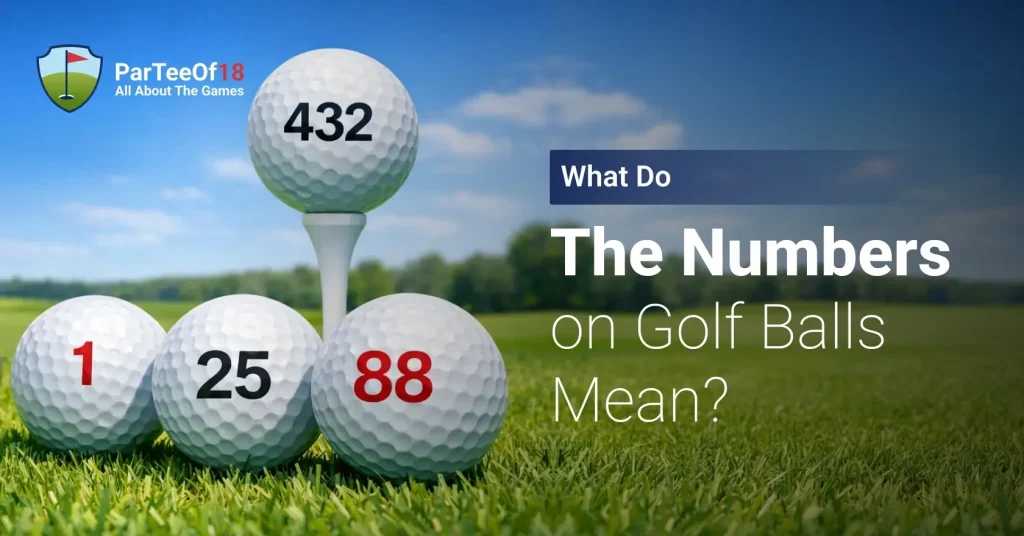
 Last Updated: July 3, 2026


You’ve probably picked up a golf ball, glanced at the number printed on it, and moved on without a second thought. Most golfers do. But those digits, whether a single “3” below the logo or a triple-digit number printed on the side aren’t just decoration. They carry real meaning, from helping you avoid a penalty on the course to revealing how a ball was engineered to perform. So what do the numbers on golf balls mean, exactly? The answer depends on how many digits you’re looking at.
What Do The Numbers On Golf Balls Mean?
The number of digits on a golf ball serves a different purpose. Most golfers just see single, double, and triple-digit numbers as simple identifiers, but they can mean different things when it comes to identification, compression, or design features. Below is a glance of all types of digit number found on golf balls.
| Type | Range | Meaning | Where to see it | Affects play? | Modern? |
|---|---|---|---|---|---|
| 1 digit | 0 to 9 | Identifies your ball on the course. Each player in a foursome uses a different number. | Below the brand name on every ball | No | Yes |
| 2 digits | 10 to 99 | Old ball: compression rating. Lower = softer, higher = firmer. New ball: custom ID number chosen by the player. | Side of the ball, smaller print | Yes | Rare |
| 3 digits | 300 to 500 | Total dimple count on the ball surface. More dimples = more lift and less drag. | Side of the ball, small print | Indirectly | Rare |
Single-Digit Numbers (1-4)
Single-digit numbers are the easiest numbers to grasp on golf balls as they are primarily used for player identification, helping golfers distinguish their ball from others in their group, especially when using the same brand and model. The majority of golf balls are numbered between 1 and 4, which are the standard or most common numbers, which can go up to 9 single-digit numbers, preventing penalties for playing the wrong ball and helping identify provisional shots. The color of the single-digit number (such as black or red) in some brands can tell which model you are playing.
Why Does a Box of Golf Balls Come With Four Different Numbers?
Most golfers pick up a box of twelve balls, pull out their favorite number, and toss the rest into the bag without thinking about it. But the packaging is actually set up with a specific purpose.
A standard dozen box is divided into four sleeves, with three balls in each sleeve. Every ball inside one sleeve carries the same number, and each sleeve carries a different number, typically 1, 2, 3, and 4. That means one box gives a full foursome everything they need to play without anyone sharing a number.
It is a small detail that most people never notice, but it is a deliberate design decision that has been standard across the golf ball industry for decades.
What Does the Color of the Number Mean?
For most of golf’s history, the color of the printed number actually carried meaning. Red numbers indicated a low compression ball, the kind designed for players with a slower swing who needed the ball to compress more easily. Black numbers indicated a higher compression ball built for stronger, faster swingers.
This color coding was a quick visual shortcut that helped golfers pick the right ball at a glance. By the mid 2000s, as compression ratings faded from packaging and marketing, the color distinction largely lost its original meaning too. On most modern balls, the color of the number is simply a design or branding choice rather than a performance indicator.
If you come across an older ball with a colored number and want to know what it was originally made for, the color is still a reliable clue.
Two-Digit Numbers (10-99)
While those single-digit numbers help you identify the ball, you might have noticed some golf balls display double-digit numbers such as 30, 60, 90, and these tell a completely different story. These numbers indicate the ball’s compression rating, which measures the ball’s firmness. The lower the compression, the softer the ball, and the higher the compression rating, the harder the ball.
To get maximum distance, you want to compress the golf ball, so the perfect ball will depend on the swing speed. If you swing under 85 mph, you’ll want a softer ball with lower compression (30-60) to get more distance and also produce less spin, while if you got faster swing over 100 mph, then you’ll want a harder ball with higher compression (90+) for better shot control as the firmer balls generate more spin.
Manufacturers use standardized methods to measure the degree of deformation of the ball under consistent force, and also make sure that the compression ratings are accurate and comparable across different brands. If you come across a ball with a small 80 or 90 printed on the side, it typically indicates an older compression-marked model. In modern golf, displaying two-digit compression numbers has largely been phased out, making such balls more commonly associated with designs from decades ago.
Why Did Compression Numbers Disappear From Modern Golf Balls?
If you have ever found an old golf ball with a number like 80 or 90 printed on the side and tried to find the same marking on a new one, you already know this shift happened. But most golfers never find out why.
Through the 1990s and into the early 2000s, compression ratings were a big part of how golf balls were sold. Manufacturers printed them prominently because players used them to pick the right ball for their swing. A number around 70 or 80 was marketed toward players with slower swing speeds, while a number around 100 was aimed at stronger, faster swingers. The problem was that this created an unofficial “men’s ball versus women’s ball” divide that many players and manufacturers grew uncomfortable with over time.
The second reason is more technical. Modern golf balls are built in multiple layers, each designed to behave differently depending on the type of shot. A single compression number cannot accurately describe how a ball performs across a drive, an iron shot, and a chip around the green. So rather than print a number that only told part of the story, manufacturers stopped printing it altogether.
Three-Digit Numbers (300-500)
The three-digit numbers that you notice on the golf balls, like 332, 463, or even 574, are not some random codes or serial numbers. These are the dimple counts on the golf ball. Dimples are small indentations on the ball’s surface (between 300 and 500) that affect its aerodynamics and flight characteristics, and manufacturers sometimes print the count right on the ball.
Dimples are not just for decorations on the golf ball; they reduce air resistance and create lift, helping the ball travel about twice as far as it would without them. While dimple counts were more commonly displayed on golf balls in the past, they are less frequently shown on modern balls; however, they continue to be a significant aspect of performance engineering in golf terms.
What Number Should You Actually Play?
The number printed on your golf ball for identification does not affect how it flies. But the construction behind it, especially compression, does. Here is a simple way to think about which type of ball suits your game.
If your swing speed is under 85 mph, a lower compression ball works best for you. These balls compress more easily on impact, which means you get better energy transfer without needing to swing harder. You will notice more distance and a softer feel around the greens.
If your swing speed sits between 85 and 100 mph, a mid compression ball gives you a good balance. You get enough feedback and control without the ball feeling too firm or too soft.
If your swing speed is above 100 mph, a higher compression ball is the better fit. Slower swingers actually struggle to compress these balls properly, but faster swingers benefit from the firmer feel and added control on approach shots and around the green.
Not sure what your swing speed is? Most golf retailers and driving ranges offer a quick launch monitor check that takes less than five minutes. Knowing this one number makes choosing the right ball much easier.
How Do Manufacturers Choose Numbers for Golf Balls?
Manufacturers choose golf ball numbers mainly to help golfers differentiate similar balls and avoid confusion on the course.
- Golf ball numbers are selected with player psychology in mind, including superstitions, personal preferences such as birthday dates, or lucky numbers.
- Brands think about how choosing a number might affect a golfer’s confidence, how well they think they’re playing, and how consistent they are during a round.
- Numbering golf balls helps with branding and marketing strategies by making it easier for people to remember the product and model identification.
- The history and evolution of golf ball numbering systems have seen changes over time to meet the needs and preferences of players.
- Clear numbering ensures compliance with standard rules set by the USGA and R&A.
How Do Golfers Mark Their Balls Without Numbers?
The rules of golf suggest marking your ball with something unique for identification purposes. If your golf balls do not have a number, here’s how you can do the marking for easy recognition:
- Dots: Putting one or more dots next to the brand logo or number is a simple but effective way to do this.
- Lines of Alignment: Drawing lines or several lines around the ball or along its side makes it easier to find and aim putts or tee shots.
- Initials or Words: Putting your initials on the ball makes it easy for golfers to find their own ball and avoid mixing it up with others.
- Stamps and Symbols: Some players use stamps, stencils, or even permanent markers (like Sharpies) to make fun designs with arrows, stars, or small logos that make their mark unique and personal.
- Color Coding: Using different colors, like blue or bright pink, for markings makes them stand out, as popularized by players like Bubba Watson.
Just like choosing the right golf ball or types of golf clubs, small details such as markings and numbering can contribute to better organization and overall course management.
Start Your Smarter Golf Journey Today!


Conclusion
The single digit printed on your golf ball is there so you can identify it on the course. It has no effect on how the ball performs. A two-digit number on an older ball tells you its compression rating, which is a measure of how firm or soft it is. On a modern ball, a two-digit number is usually just a custom identification choice. A three-digit number, if you ever see one, tells you how many dimples the ball has. That is the complete picture. Every number on a golf ball serves a practical purpose, and once you know what to look for, you will never look at one the same way again.
FAQs
How can you tell how old a golf ball is?
To find out how old a golf ball is, look at the “side stamp” (arrows, lines, or logos next to the brand name). These change every 1-2 years to show which generation the ball belongs to. Use the USGA Conforming Lists website to find out which release years these markings match up with. If you keep modern, high-performance balls in a cool, dry place, they should last for up to seven years.
Are expensive golf balls worth it?
For mid- to low-handicappers who want the most spin, control, and consistent flight in their short game, expensive golf balls (usually $40 to $55 or more per dozen) are usually worth it. They have urethane covers and a multi-layer construction that makes them work better on the greens. But for beginners or high-handicappers who lose a lot of balls, surlyn-covered balls with 2-3 layers are a better deal and cost-effective.
What if two players pick the same ball number?
If two players use the same brand, model, and number, it’s not a penalty, but there is a “wrong ball” risk. If a ball cannot be positively identified, it is considered lost. Players must mark the balls that make them easy to tell apart. If they can’t, both balls are considered lost if they are found together.
Does the number change how the ball plays?
The number of digits on a golf ball (one, two, or three) usually doesn’t change how the ball plays. These numbers are mostly for identification and, in the past, to show things like compression or dimple count. They are meant to help golfers to determine their ball from the others in the group.
Can I Legally Use Golf Balls With No Numbers Printed on Them?
Yes, you can legally use golf balls that don’t have numbers on them as long as they are on the USGA List of Conforming Golf Balls. Golf rules don’t say that the ball has to have a number on it; it just has to meet size, weight, and speed standards.
Do softer golf balls go further?
For most golfers with moderate to slow swing speeds (less than 100 mph), softer (lower compression) golf balls tend to go further as they are easier to compress, which makes the balls go faster and spin less. But for people who swing fast (>105 mph), firmer, higher-compression balls usually provide more distance.
Do Numbers affect performance?
The numbers on golf balls don’t change the physical performance (distance, flight, or spin), but they are important for keeping track of your score and avoiding penalties. The performance of a ball is determined by its internal construction (core, layers, cover), not the number printed on it.
All Premium Features Unlocked
No catch. Cancel anytime




MacKenzie Tyler is a competitive golfer preparing to turn professional on the LPGA Tour. A former All-League golfer and three-sport athlete, Tyler spent nine seasons caddying at Sebonack Golf Club on Long Island, where she developed a thorough understanding of the game. In 2025, she won the Long Island Amateur at -4 over 36 holes, qualified for the U.S. Mid-Amateur, and became the first alternate at her U.S. Women's Open qualifying site after leading the field through round one.


Related Posts

9 Fun Golf Putting Games to Play (Practice Green and On the Course)
Discover fun golf putting games for the practice green and real rounds, plus the drills that back them up and...

What Is a Chip Shot in Golf? How to Hit It and When to Use It
Learn what a chip shot is, when to chip vs. pitch vs. putt, and how to hit it clean. Simple...

What Is Lag Putting? (And the 3 Drills That Actually Fix It)
Learn what lag putting means, why distance control matters, and three practical drills to help reduce three-putts and improve your...

What Is PCC in Golf? Playing Conditions Calculation Explained
PCC is the daily adjustment that corrects your score differential when a course plays easier or harder than its rating....