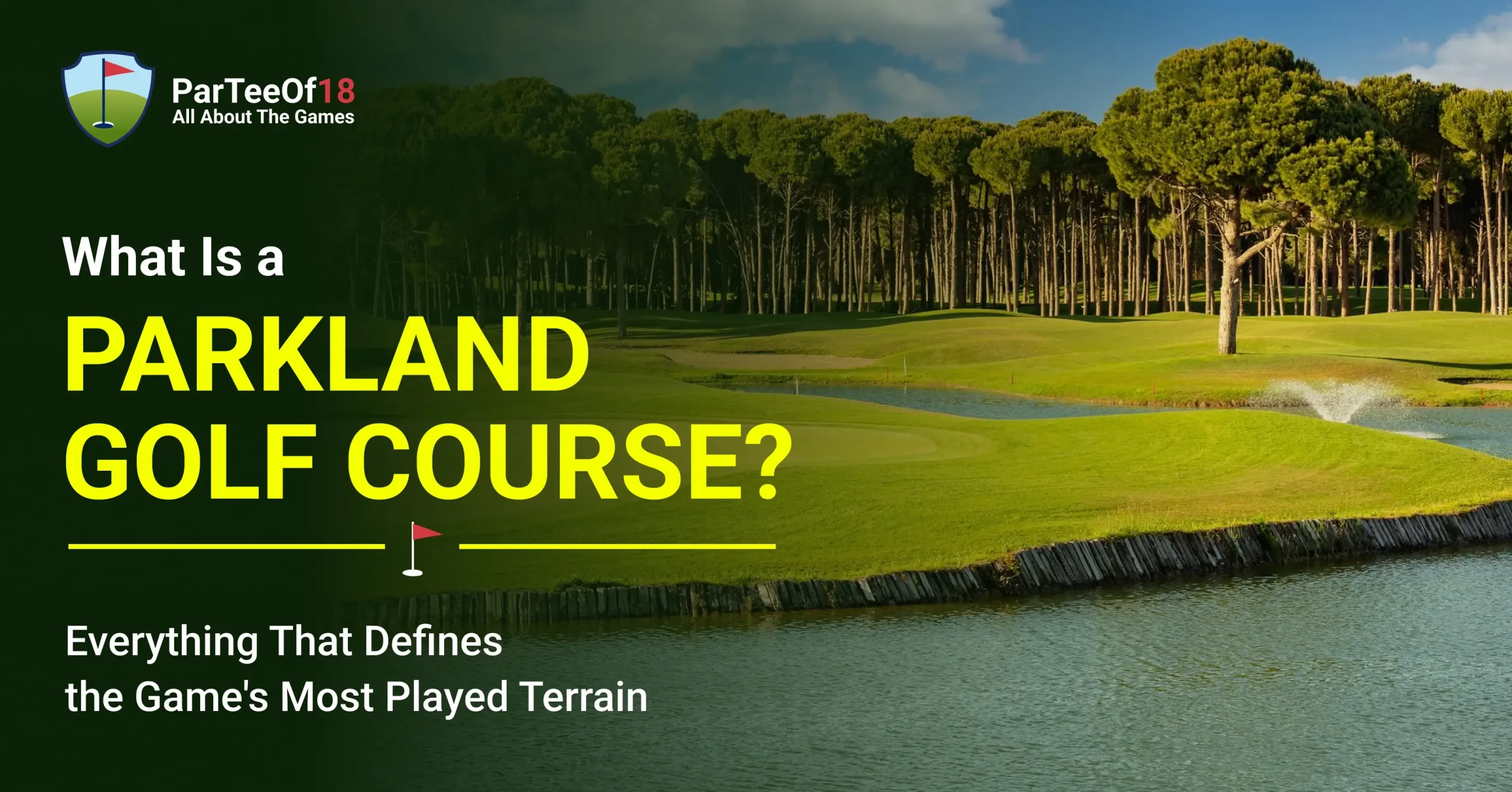
The parkland golf course is one of the most renowned and popular forms of golf course in the world. It is defined by features such as lush tree-lined fairways, manicured landscapes & strategic design; these courses provide a totally different experience from coastal links layouts. They demand accuracy, smart course management & a strong all-around game rather than just power.
However, why is a parkland golf course different from other types of golf courses? And why is it popular enough to dominate the sport? In this guide, you will find out more about its features, origins, and influence on today’s game of golf.
What Is a Parkland Golf Course?
A parkland golf course is defined by its inland nature, the presence of green vegetation, and tree-lined fairways. Contrary to links courses, which are situated in rugged areas near the coast with minimal vegetation, these types of courses have been designed using rich vegetation.
Enjoying a round in such courses resembles playing golf in a tranquil park setting, giving rise to their names. The surface is usually softer and the greens are more receptive, which allows the ball to stop easily on landing. This kind of golf course rewards accurate shots, precision, and strategic game planning over creativity or risk-taking in shots.
The Origin of Parkland Golf Courses
Parkland golf courses came into existence at the end of the nineteenth century to the beginning of the twentieth century because golf had moved inward from its Scottish seaside origins, resulting in the appearance of the first “park courses” in Great Britain. Legendary golf course designers like Alister MacKenzie, Donald Ross, and Robert Trent Jones Sr. contributed greatly to the development of the parkland style in the year that followed.
Designers began using wooded country estates and manicured parkland, replacing dunes with tree-lined fairways, soft turf, and strategic hazards. This shift introduced a more controlled “target golf” style focused on precision. This approach was notably advanced by Alister MacKenzie and Bobby Jones whose collaboration is famously reflected in the design of Augusta National Golf Club.
Key Characteristics of a Parkland Golf Course
Parkland golf courses have very nice green landscapes. Each feature plays a specific part in influencing golf players’ experience during the game. The following list includes some of its characteristics.
Tree-lined fairways
Parkland courses are defined by fairways bordered with mature trees. These create narrow playing corridors, making accuracy more important than power. A straight drive is often rewarded, on the other hand mis-hits can quickly lead to trouble.
Manicured greens
Meticulously maintained with dense, smooth turf, these greens ensure a consistent roll. Their lush, soft nature makes them highly receptive, allowing golfers to play aggressive approach shots that stop quickly near the hole, rewarding precise green reading and touch.
Clay-rich soil
Most parkland-type golf courses have clay or very fine soil which holds water very well. That gives these golf courses softer grounds so the ball will stop rapidly after hitting the ground and not run out as much as on other types of golf courses. This allows golfers to have more confidence in their target pin and aim for it with a straight shot.
Artificial water hazards and bunkers
Manmade water bunkers are common on parkland golf courses and are strategically placed. The purpose of these hazards is to test a golfer’s ability to make decisions based on course conditions and to place their shots accurately. The golfer must plan how he/she will play every golf shot rather than relying solely on distance.
Serene and Scenic Landscapes
The design element of green lawns, trees and landscaped areas turns this area into an attractive place to relax and enjoy nature. Not only does this add to the beauty of the playing surface, but also adds to the enjoyment of playing as well.
Parkland vs. Links vs. Heathland: What’s the Actual Difference?
Not all golf courses are created equal; parklands, links, and heaths all differ in terms of layout, design, challenges, and even the playing conditions. Here’s a quick overview:
| Feature | Parkland | Links | Heathland |
|---|---|---|---|
| Location | Inland golf courses established in wooded or landscaped settings | Coastal land shaped by wave erosion. | Inland rugged and sandy old grazing land. |
| Vegetation | Dense trees, abundant grass with lush, well-manicured landscaping | Coastal grasses, gorse, and fescue, no planted trees | Heather and gorse, pine trees, and open scrub. |
| Ground | Soft, well-watered fairways and receptive greens | Hard, firm fairways with fast-running turf | Firmer than parkland, softer than links, with well-draining sandy turf |
| Hazards | Man-made water features, bunkers, and water hazards | Natural dunes, hollows, and wind-shaped bunkers. | Natural heather, gorse rough, and bunkers |
| Wind | Most protected by trees and other terrain. | Strong and omnipresent ocean winds. | Medium-strength, depending on trees, winds, and terrain. |
| Play Style | Precision-based target golf. | Creative ground game with low and rolling shots; and | Strategic golf and placement/control. |
| Soil Type | Moisture-retainer clay based soil. | Sandy soil with excellent drainage | Sandy, free-draining inland soil |
| Example | Augusta National Golf Club | St Andrews Links (Old Course) | Sunningdale Golf Club |
The Most Famous Parkland Golf Courses in the World
Parkland golf courses are one of the most renowned across the globe because of their stunning features and challenges. Some of the most popular ones include those located in the USA, the UK, and elsewhere.
The American Icons
The US has some of the most renowned examples of these types of courses. Augusta National Golf Club is arguably the best-known example of this style, with its tree-lined fairways and smooth greens, along with being the venue of the Masters Tournament. There’s also Winged Foot Golf Club, recognized for its difficult course design and lush roughs. Oak Hill Country Club is another great example of an American parkland golf course, featuring a heavy tree presence and tough tee shots.
The British and Irish Parkland Gems
While link golf courses predominate throughout this area, there are also some terrific parkland courses. The Wentworth Club is an example of this type of course, as it frequently stages major DP World Tour events. It is best known as the home of the BMW PGA championship on the DP WOrld Tour. One outstanding Irish parkland course is Adare Manor Golf Course, which was renovated by Tom Fazio in 2018. It is known for its beautiful setting within a historic estate in County Limerick. The course had major modern renovation that transformed it into a championship-level layout.
Global Standouts
Parkland golf courses have spread to many parts of the world, adapting to local geography. Valderrama Golf Course in Europe serves as an excellent example, featuring narrow fairways and cork trees. In Asia, Narashino Country Club is a class parkland course that has also hosted top international events which includes Japan Open and 2021 Zozo Championship (PGA Tour).
You May Also Checkout: What is an Executive Golf Course? The Complete Guide
Why Parkland Courses Dominate the PGA Tour
Parkland courses dominate PGA since they offer the perfect setting for contemporary professional golf, giving the golfers the best conditions possible, including lush, pristine surroundings, high spectator drama, and even “target golf,” which is more suited to the golf played by the current generation of golfers. Let’s have a closer look:
Television-Friendly Aesthetics: Due to the deep green, tree-lined fairways and pristine landscapes, these courses often provide a more vivid visual contrast on television than the brownish, rugged terrain found on links courses.
Target Golfing Environment: These courses typically produce softer turf and more receptive greens; therefore, allowing a player to hit an iron shot directly at the flag and have the golf ball stop quickly. This gives an edge to high-trajectory iron shots and a staple of modern, power-driven games.
Spectator and Logistics Management: Because parkland golf courses are typically country-club style and away from the coast, they allow for easy transportation and accommodate large numbers of spectators, as well as large hospitality facilities, making them ideal for high-volume tour events.
Strategic Design and Hazards: Although parkland courses lack natural elevation changes, designers include elements such as water hazards, difficult bunkers, and dense trees to ensure shots on the course are strategic.
Controlled and Predictable Play: These courses offer players a protected setting, compared to coastal golf courses, and therefore a predictable game can be expected.
How to Play a Parkland Golf Course Well
Golfing a parkland golf course is all about making wise decisions, accurate hits, and proper yardage control. Here are some helpful tips to get you going on the right track.
- Prioritize Tee Accuracy – The priority is to keep out of the trees and the rough. A short tee shot in the fairway is preferable to a long one into the rough.
- Fly the Ball to the Green – As the greens are often soft, the ball will not carry far. Select the club appropriately to land the ball on the green rather than playing a rolling shot.
- Strategize Around Hazards – Many parkland golf courses have strategically positioned bunkers & water hazards. Play smart around them.
- Focus on Approach Distances – With the softness of the course, you can always try to attack the flagstick. Make sure to know your distances to avoid bunker shots from the front of the green.
- Strategic Planning – Plan two or three moves ahead, particularly on doglegged holes. Strategize about your position from the teeing ground, ensuring you do not face obstacles such as trees, which will make your next move to the green difficult.
Read contours and breaks easily with advanced 3D visuals.


FAQs
Is Augusta National a parkland golf course?
Yes, the Augusta National Golf Club is recognized as a parkland golf course due to the presence of tree-lined fairways and lush grass among other characteristics of the type. Nevertheless, there are factors which distinguish the golf course from a typical parkland course like its elevated terrain and water features.
What is the difference between a parkland and a links golf course?
Parkland and links courses vary significantly in terrain, design and playing conditions. Parkland courses are inland and characterized by lush grass, tree-lined fairways, perfectly manicured greens, water hazards, and well-defined roughs. While a links golf course is typically located along the coastline, built on sandy soil with natural dunes, minimal trees, firm fairways, and deep bunkers. Wind, uneven lies, and quick-running ground require creativity, low ball fight and control over distance.
Are parkland courses easier than links courses?
Parkland courses are easier as compared to links courses because of their predictable surfaces and clear landing zones.. In parkland courses, fairways are lined with trees, softer grass, and clear landing zones, which makes shot selection more straightforward. On the other hand Links courses are coastal; therefore, their fairways are firm, with sand dunes, uneven lies and strong winds, which make distance control and accuracy much more challenging for golfers.
Can beginners play parkland golf courses?
Definitely, parkland golf courses would fit well with beginner players since these courses have fairways, landing zones, and better playing surfaces. However, the presence of several tee boxes may allow shorter distances for the players. Nevertheless, very wooded courses and championship courses might prove challenging, Par 3 golf courses serve as an excellent entry point within the parkland category. So beginners should start with easier course designs.
What is a heathland course and how does it differ from parkland?
Heathland golf courses are inland golf courses that are built on sandy soil, which have tough grass, vast open spaces, and plants such as heather instead of dense trees. They have less grass cover and defined fairways than parkland courses, hence allowing more shots played from the ground surface.
Why are parkland courses more expensive to maintain?
Maintenance of parkland golf courses is expensive due to the way they are maintained. This includes watering, trimming, fertilizer application, pruning, and bunker maintenance. Unlike the links style of golf courses, the maintenance of these courses highly relies on humans.