
 Golf Tips & Education
 MacKenzie Tyler
 February 17, 2026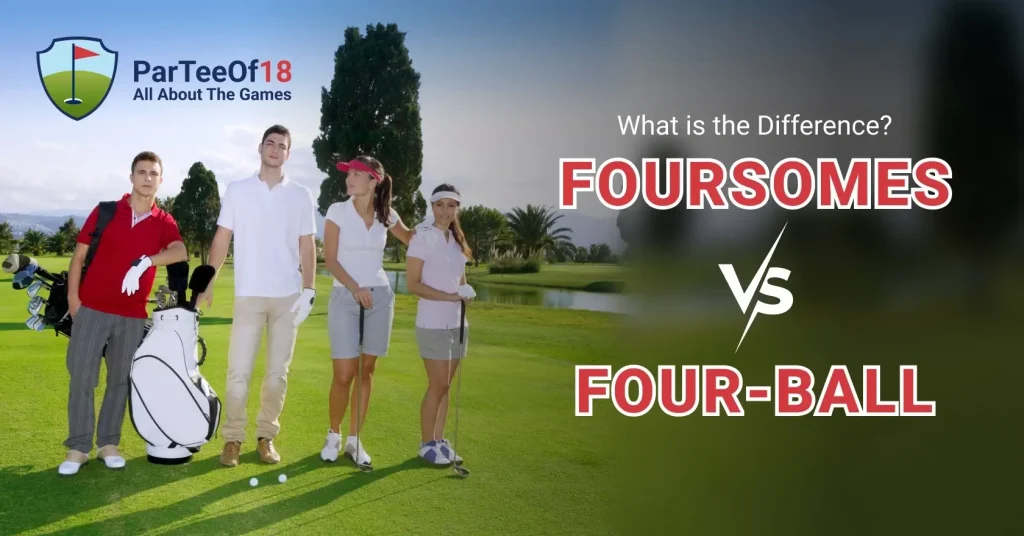
 Last Updated: July 3, 2026


What happens when two golfers share a ball and make a mistake? And how does the game feel when each player has a chance to save the hole? That’s the core difference in the foursomes vs fourball golf formats. At first, both seem like easy ways to set up a team. But once you get on the course, the pressure, strategy, and rhythm change a lot. One format tests trust and accuracy with ‘alternate shots,’ while the other rewards daring play and individual skill. So, which format makes players work together better and which one gives them more freedom? The answer could completely change how the game is played.
What is Fourball in Golf?
Fourball (or 4BBB – “better ball”) is a team golf format where two partners play their own balls throughout the round, with the team counting only the lowest score between them on each hole. It can be played as stroke play or match play and is popular in team events like the Ryder Cup.
What is Foursomes in Golf?
Foursomes in golf, often called “alternate shot,” is a team format where two players compete as a side, sharing one ball and alternating strokes until the ball is holed. One player tees off on all odd-numbered holes, while the other tees off on all even-numbered holes, continuing the sequence for the entire round. This format is commonly played in both match play and stroke play competitions.
Fourball vs Foursomes Golf at a Glance
Fourball vs Foursomes golf formats are staple team competitions in events like the Ryder Cup and Solheim Cup. Understanding these distinctions helps golfers quickly see how each format shapes team play, scoring, and other factors in a quick overview of the foursomes vs fourball below:
| Factors | Fourball | Foursomes |
|---|---|---|
| Balls in Play | 4, each player uses their own | 2, one per team |
| Commonly Known as | Better ball or Low ball | Alternate shot |
| Team Score | Lowest score of the two partners | Combined score of partners |
| Tee Shots | Both players tee off | Alternate teeing off (Odd/Even) |
| Shot Rotation | Players play their own ball | Alternate shots until holed |
| Handicap Allowance | 90% Match play, 85% Stroke play | 50% of the combined team’s handicap |
| Primary Strategy | Aggressive (one player can carry) | Consistent (avoid big errors) |
Key Differences: Foursomes vs Fourball
While both formats are played in teams of two, the way they unfold on the course is fundamentally different. Understanding these core distinctions between foursomes vs fourball makes it easier to choose the format that best fits the players and the occasion.
The Number of Balls in Play
The primary difference between Foursomes vs Fourball golf is the number of balls in play: Foursomes uses two balls total (one per team), while Fourball uses four balls total (one per player). Foursomes requires partners to alternate shots, whereas Fourball allows each player to play their own ball throughout.
How Scoring Works?
Foursomes involves the team recording a single score for the hole based on the total strokes taken to get the one ball into the hole, whereas in Fourball, each player plays their own ball, and the best score among the two partners counts as the team score for that hole. For example, if one partner makes a Birdie, that score becomes the team’s result for the hole.
How Handicaps Work?
Foursomes vs fourball handicap calculations differ significantly based on whether players use their own ball or share one. Foursomes usually use 50% of the team’s combined course handicap, while fourball focuses on individual handicap allowance, 90% (match play) and 85% (stroke play) relative to the lowest handicapper, with each player receiving strokes. Foursomes need more combined handicap calculation, while four-balls focus on how good each player is compared to others.

Pace of Play
Foursomes are much faster than four-ball because they only use two balls instead of four. This means that a round can be up to 45–50 minutes faster. It keeps the rhythm steady because there are fewer shots, which is different from the formats that people often argue about in Best Ball vs. Scramble discussions. According to the USGA guidelines, foursomes usually last about 4 hours and 6 minutes, while four-ball matches can last up to 4 hours and 54 minutes.
Of course, these timings will vary a bit depending on whether you are playing a quick 9-hole game or a full 18-hole round of golf, as well as course traffic and group size.
Pros & Cons of Foursomes vs Fourball
Before deciding between foursomes vs fourball, it is crucial to know how each format affects team dynamics, stress, and overall strategy. Both are popular ways to play on a team. Here’s a quick list of the pros and cons of fourball vs foursomes.
Foursomes Golf Format
Pros
- Promotes strong teamwork and coordination.
- Faster pace of play compared to other formats.
- Strategic shot planning enhances course management.
- Builds trust and communication between partners.
Cons
- Less individual play opportunity.
- One bad shot can significantly impact the hole.
- Higher pressure, as every shot directly affects your partner.
Fourball Golf Format
Pros
- Each player plays their own ball.
- More scoring opportunities (best ball counts).
- Safer format; one partner can recover if the other struggles.
- Encourages aggressive play and risk-taking.
Cons
- Slower pace of play.
- Can create an imbalance if one partner consistently carries the team.
- Less strategic coordination and decision-making between partners.
Which Format Should You Choose?
Choosing between fourball vs foursome golf depends on the players and the purpose of the round. Fourball is great for beginners, casual games, and charity events because each golfer plays their own ball. This makes it less stressful and lets one partner cover for the other. It’s easier to use and more fun for people with different skill levels. While foursomes, on the other hand, is better for tournaments and experienced players, as the alternate-shot format requires accuracy, strategy, and good teamwork. In short, fourball is more fun and flexible, while foursomes is better for competitive play.
If you want to test the strength of a friendship, play a Foursomes match. If you want to enjoy a few drinks and a relaxed afternoon, stick with Four-ball.
Start Your Smarter Golf Journey Today!


FAQs
Which one is played in the Ryder Cup?
Since 1979, both foursomes and fourballs have been played in the Ryder Cup.
Can you play both at the same time?
No, you cannot play fourball and foursome at the same time, as the handicapping and ball counts differ. However, you can play a fourball match play and stroke play simultaneously, as both require players to play their own balls.
What is harder for beginners?
Foursomes is much harder for beginners than fourball, as they have to share a ball with a partner, and a bad shot could ruin the whole hole. In fourball, beginners can count on their partner’s better score, but in foursomes, they have to do well under pressure all the time.
Is “Best Ball” the same as “Four-Ball” or “Foursomes”?
“Best Ball” and “Four-Ball” are often used interchangeably, but they are not exactly the same. Under the official Rules of Golf, Fourball refers specifically to a 2v2 match format, while Best Ball is a broader term typically used for teams of three or four players, where only the lowest score on each hole counts toward the team’s total.
All Premium Features Unlocked
No catch. Cancel anytime




MacKenzie Tyler is a competitive golfer preparing to turn professional on the LPGA Tour. A former All-League golfer and three-sport athlete, Tyler spent nine seasons caddying at Sebonack Golf Club on Long Island, where she developed a thorough understanding of the game. In 2025, she won the Long Island Amateur at -4 over 36 holes, qualified for the U.S. Mid-Amateur, and became the first alternate at her U.S. Women's Open qualifying site after leading the field through round one.


Related Posts

Gross vs Net Golf: What Each Score Means and How to Use Both
Gross vs net golf explained simply. Learn what each score means, how to calculate both, and which one counts in...
Handicap Index vs Handicap: What’s the Difference and Why It Matters
Handicap index vs handicap aren't the same. Learn the difference, how course handicap is calculated, and which number to use...
Graphite vs Steel Shafts: Which Is Better for Irons?
“Graphite is only for seniors and beginners.” If you still believe that, you’re missing out on some of the biggest...

Lob Wedge vs Sand Wedge: What’s the Difference and When to Use Each?
Confused about lob wedge vs sand wedge? You’re not alone. Many golfers understand that both clubs can be useful tools,...