

 MacKenzie Tyler
 March 5, 2026
 Last Updated: July 3, 2026


Miss a three-footer and suddenly that putter feels like a stranger in your hands. Sound familiar? The truth is, choosing between different types of putters can make or break confidence on the greens. From classic blades to high-MOI mallets, each design changes feel, alignment, and forgiveness. For anyone searching for the best putter for beginners or fine-tuning a seasoned stroke, knowing what to look for isn’t optional; it’s the difference between tapping in and walking off frustrated.
Types of Putters Based on Head Shape
Let’s start with the most obvious difference in the shape of the putter head. This is the first thing you notice when you address the ball, and it has a direct effect on alignment, feel, and forgiveness. There are two main types of putters:
Blade Putters
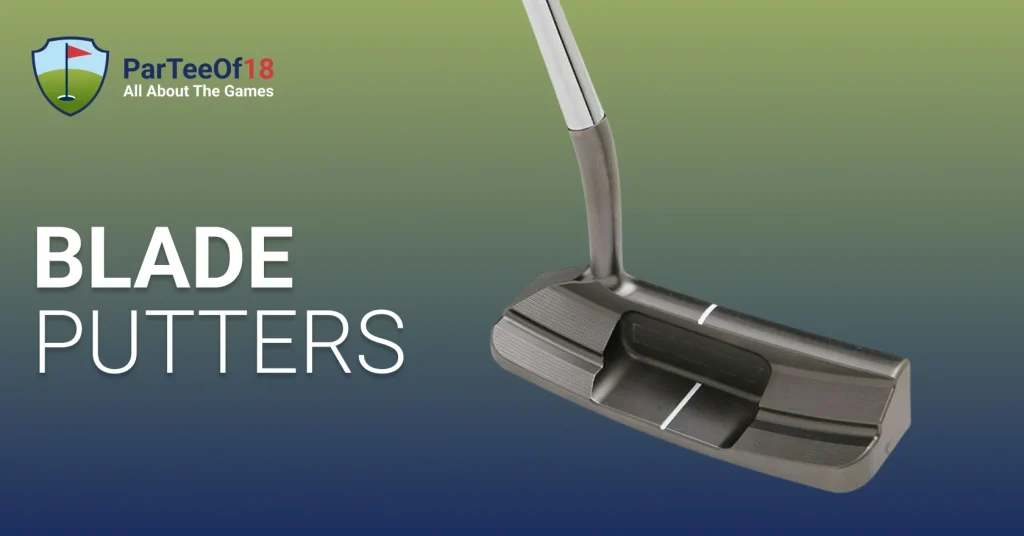
Blade putters are the traditional and oldest style of putters. They have a more concentrated sweet spot located in the center of a thin, flat, angled clubhead with a straight and slightly curved hosel, which appeals to golfers who value control and accuracy. Their lightweight nature allows for a greater connection to the ball, which is why many skilled golfers and purists favor them.
Blade putters are often milled from a single piece of metal for extra balance and feedback. However, they lack the forgiveness of other designs, so they may not be the best putter for beginners.
Mallet Putters
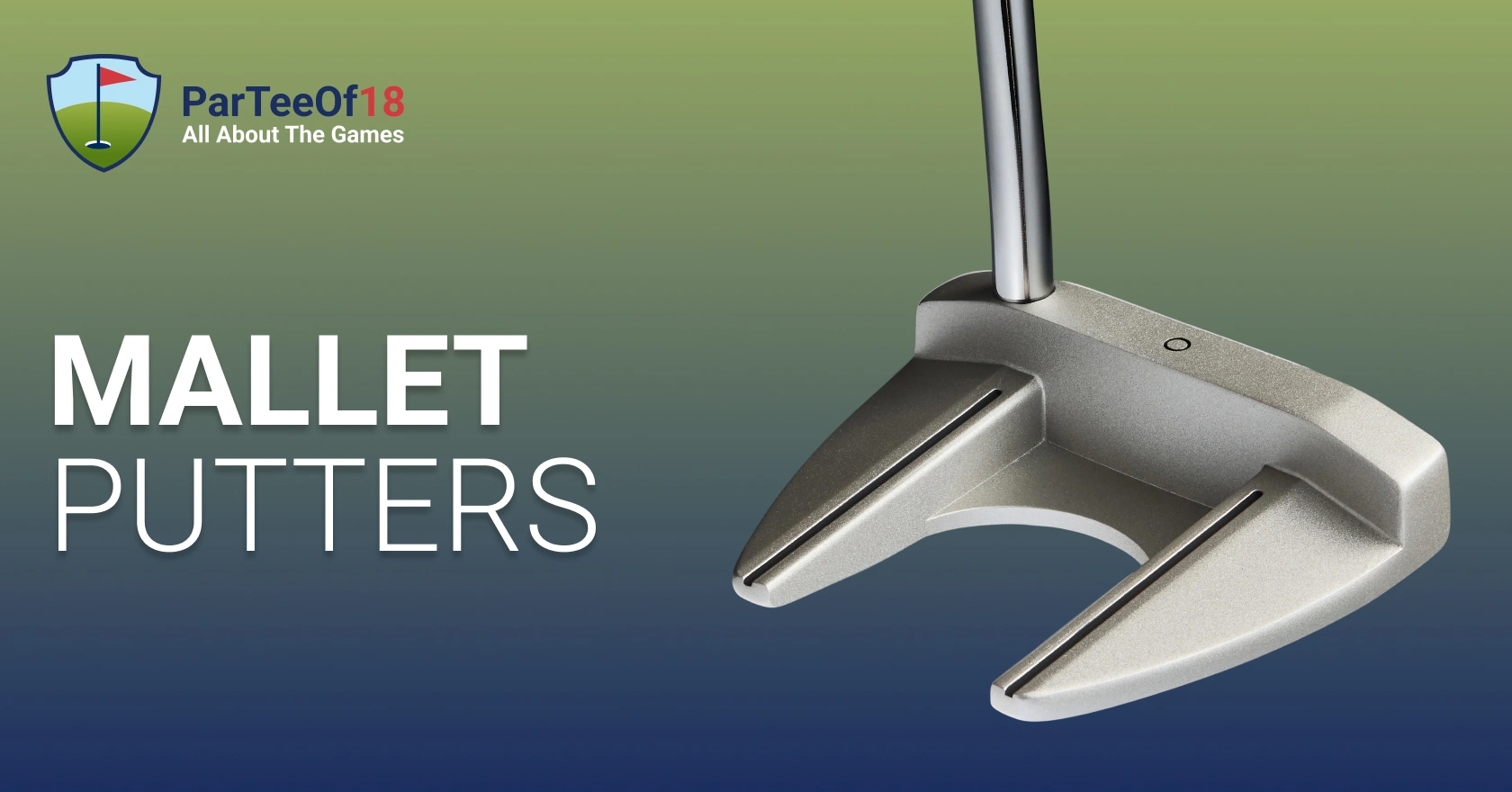
Mallet putters have bigger, more forgiving clubheads that often have unique shapes like squares, half-circles, and other creative designs. These putters have a high MOI (Moments of Inertia), which helps keep the clubheads stable. The expanded sweet spot reduces twisting when the ball is hit off-center, making mallet putters ideal for golfers who use straight-back, straight-through putting strokes.
Mallets are the best putters for beginners as they are also flexible, and the clubhead has alignment aids that help golfers line up their putts more accurately. With an increasing number of players dominating the PGA tour, over 60% of players are now using them.
Also Read: Blade vs. Mallet Putter: What’s the Difference?
Types of Putters Based on Weight and Stability
Let’s talk about the weight distribution. Stability affects how steady the putter feels, especially when you hit it off-center. Some designs spread weight around the head to make it more forgiving, while others add weight to make the tempo smoother. This is how the following types of putters work:
Peripheral-Weighted Putters
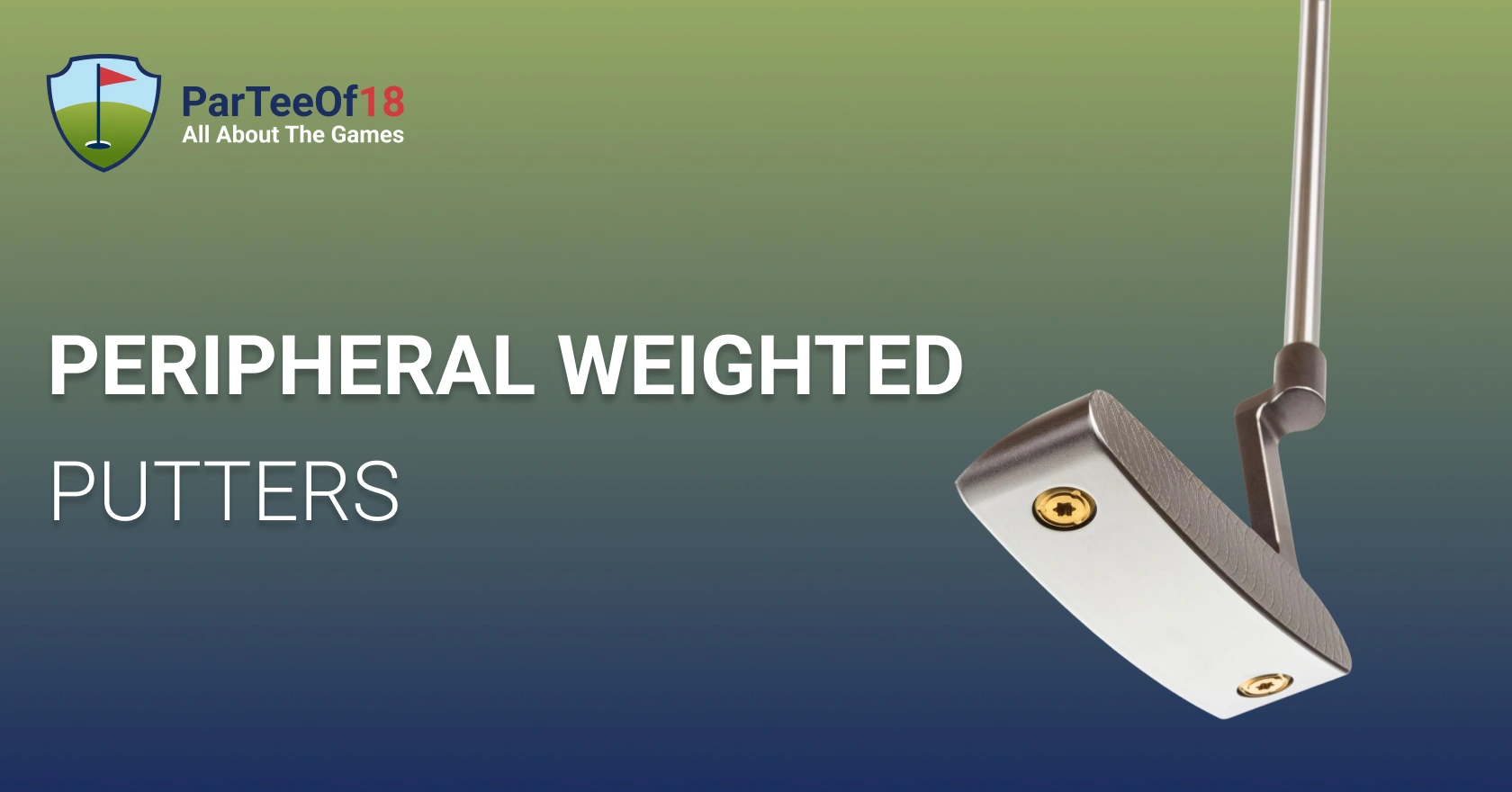
A Peripheral-Weighted Putter has extra weight around the outside edges, or periphery, of the putter head. These putters make it less likely that the ball will twist when you hit it off-center. This design makes it easier for golfers to get a smooth roll by making it more stable and accurate.
If you have trouble hitting the ball on the sweet spot every time, Peripheral-Weighted Putters are a great choice. They are between blade and mallet putters, giving you a mix of control and forgiveness.
Counterbalanced Putters
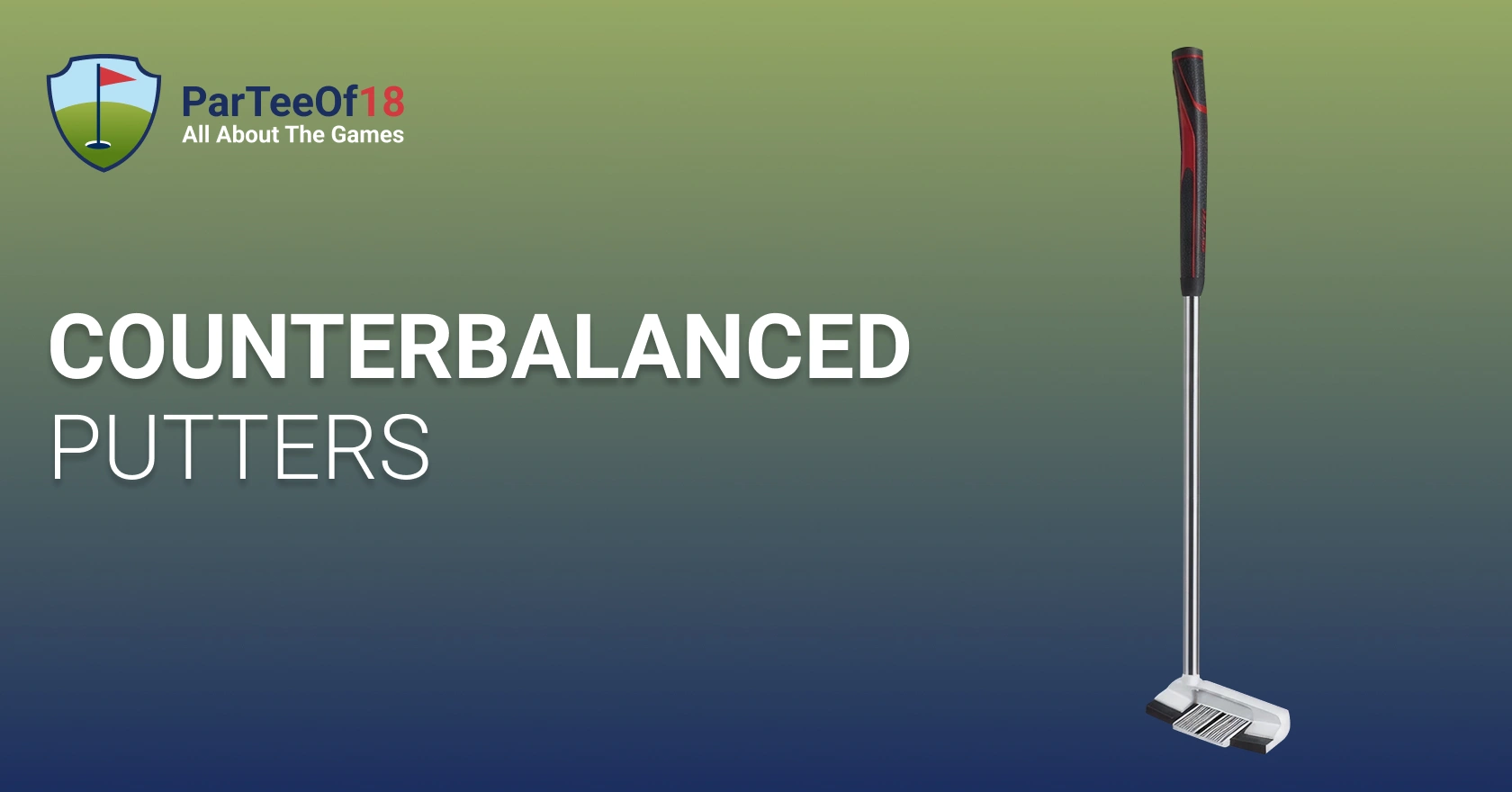
A counterbalance putter has a heavier head and a longer, thicker grip that adds about 50g of extra weight, placing more mass in the hands to counteract the head weight, which makes your stroke more stable and smooth, like a pendulum. It helps golfers control distance on fast greens and cuts down on wrist movement, making it perfect for people who want a better tempo and a steadier, more consistent stroke.
Types of Putters Based on Face Technology
Now let’s talk about the face, which is the part that hits the ball. It influences the trends, sounds, and the roll of the ball. Some designs give you sharp feedback, while others give you a softer touch. Textured patterns are meant to make the roll more consistent. Let’s see how these types of putters are different:
Milled Face Putters
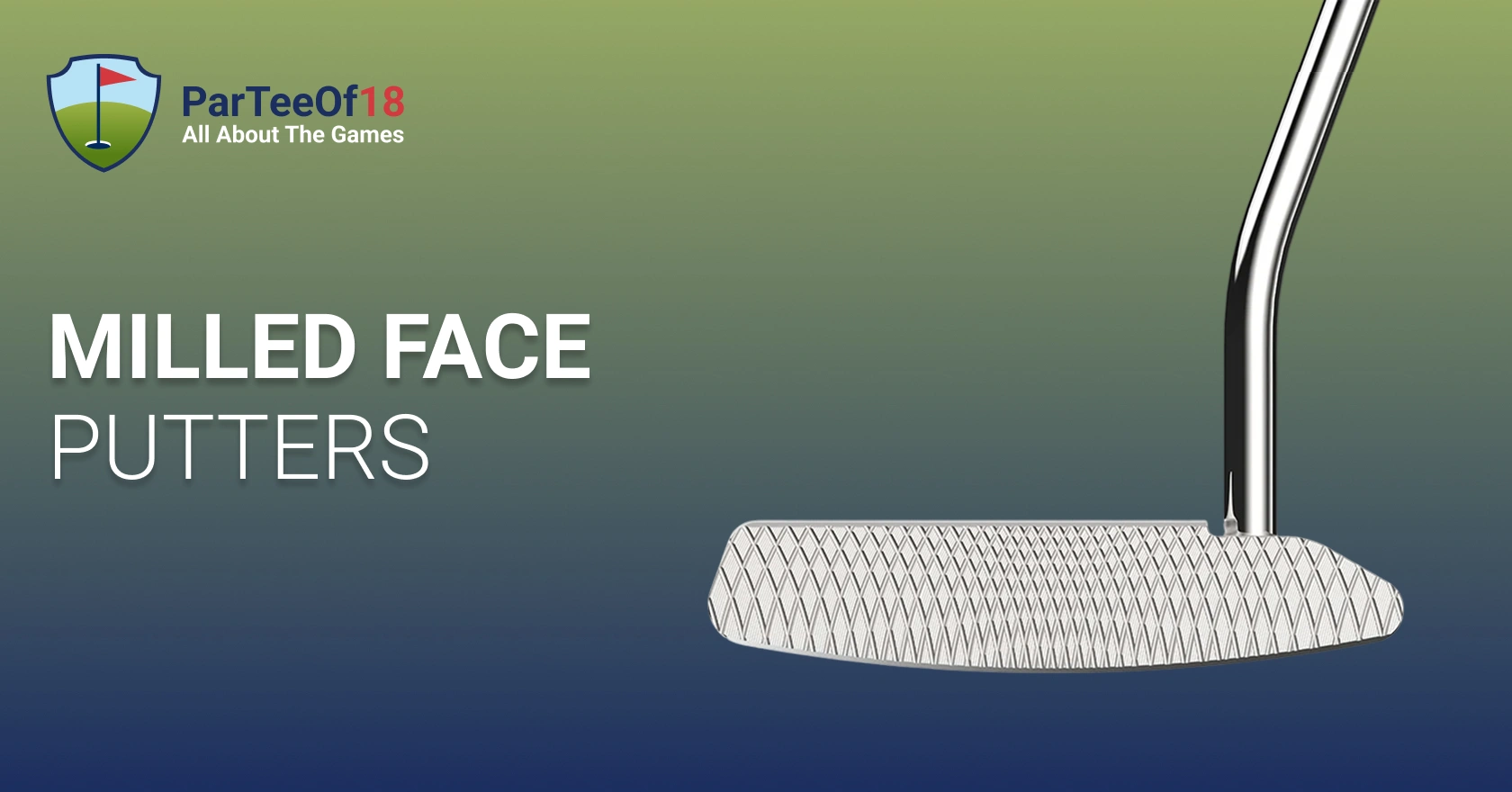
Milled face putters, often referred to as CNC milled, are typically made from a single block of metal, primarily stainless steel. Some high-end models may use aluminum or carbon steel, or some other materials. This creates a smooth and seamless clubface that enhances feel and feedback. The precision engineering behind the milled putters makes them a favorite among professional golfers and those who prioritize accuracy.
The design of a milled face putter offers a consistent roll with every stroke, which makes them ideal for players who want to fine-tune their performance. The craftsmanship and high-quality materials often come with a higher price tag, but for a skilled golfer, the investment can pay off in lower scores and greater confidence on the greens.
Insert Face Putters
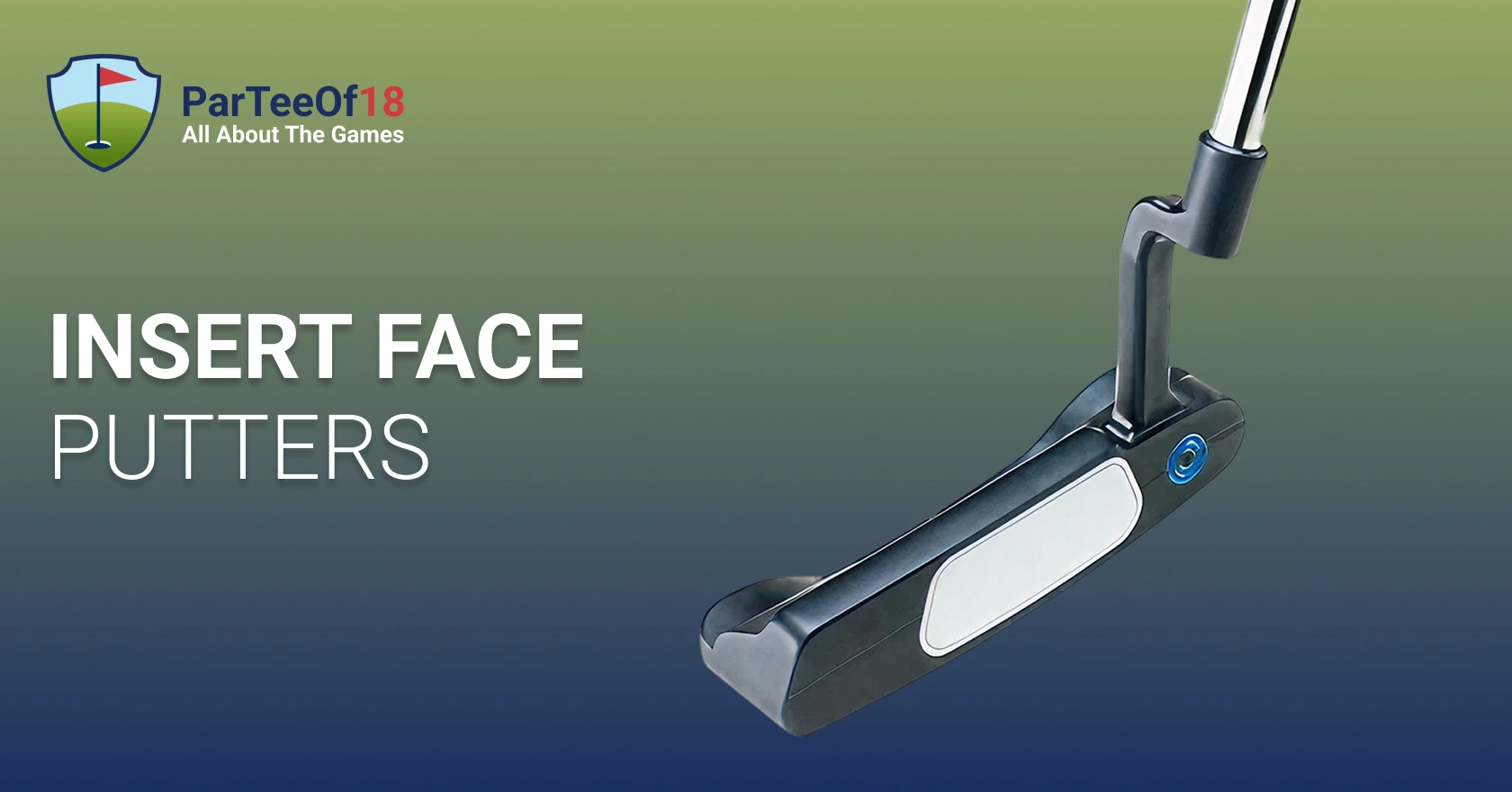
An insert putter features a specially designed insert in the clubface that is usually made of aluminum, polymer, elastomer, or another soft material. This design makes the club feel softer and helps you control speed better, especially on faster greens.
For players who tend to hit the ball hard, an insert putter with a softer face can help keep the ball from rolling too far past the hole. These putters are also great for people who are just starting out and still learning how to feel and touch the greens.
Grooved Face Putters
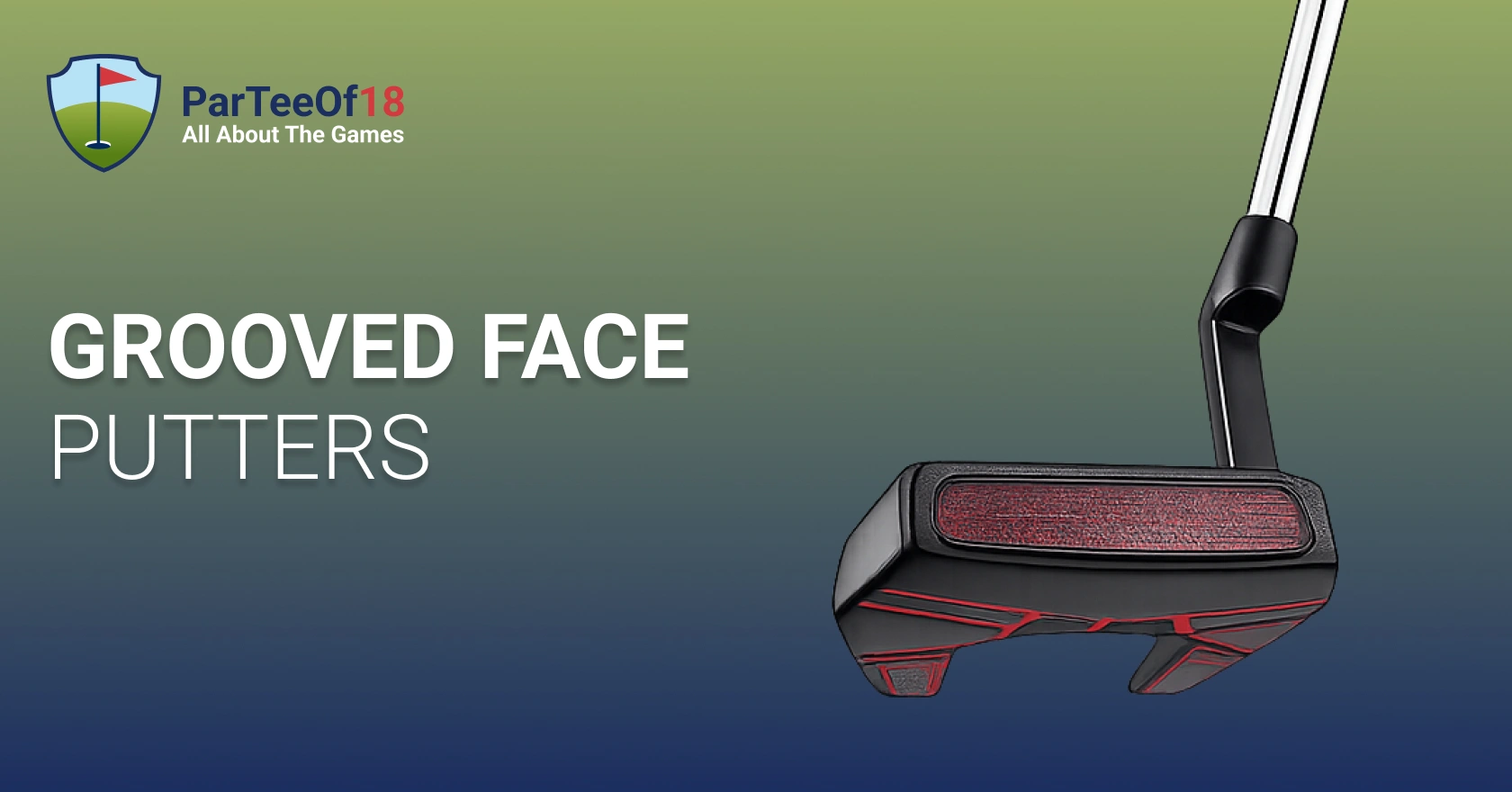
Grooved face putters feature engineered, milled grooves or patterns designed to enhance feel, reduce skid, and improve distance control by reducing surface contact with the ball. The groove helps generate topspin, provided that the ball stays on its intended line.
These grooves typically provide a softer, muted sound at impact and can normalize ball speeds on off-center hits compared to smooth-faced putters. The advanced technology behind grooved face putters makes them a popular choice among golfers who want to improve their putting accuracy.
Types of Putters Based on Balance and Stroke Type
Balance is a big part of how the club moves when you hit the ball. Some designs help keep the face square, which makes for straighter strokes. Others support a natural arc with more rotation. Knowing this difference between the types of putters makes it easier to find one that fits your stroke style.
Face-Balanced Putters
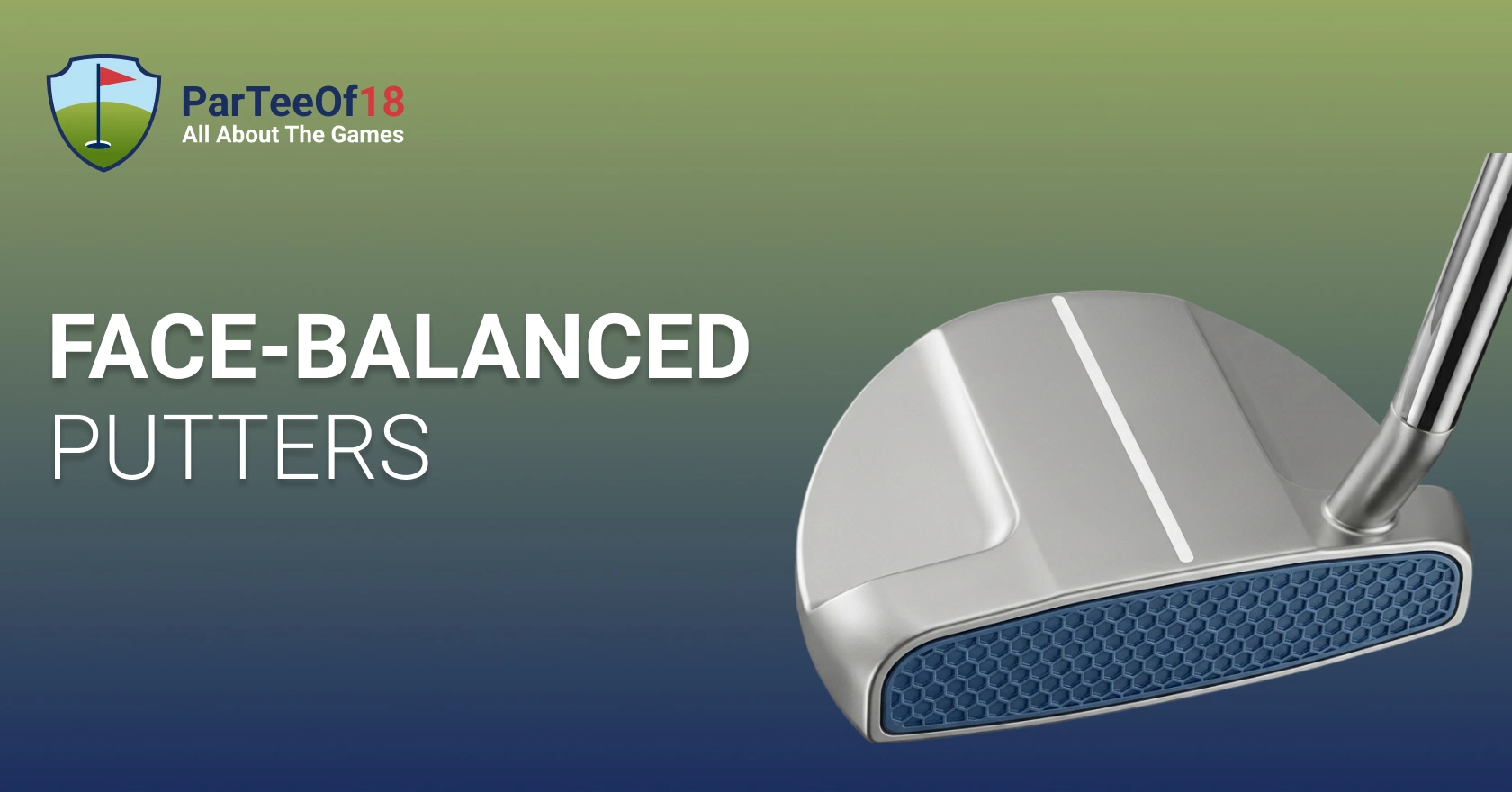
People often suggest face-balanced putters for golfers who have a straight-back straight-through putting stroke because they keep the face pointing upward when balanced on a finger. These putters keep the face square for longer, which means less twisting. This makes the putts more consistent and cuts down on the number of three-putts on the green. Face-balanced putters come in a range of head shapes, but they are most common in mallet-style putters.
Toe-Balanced Putters
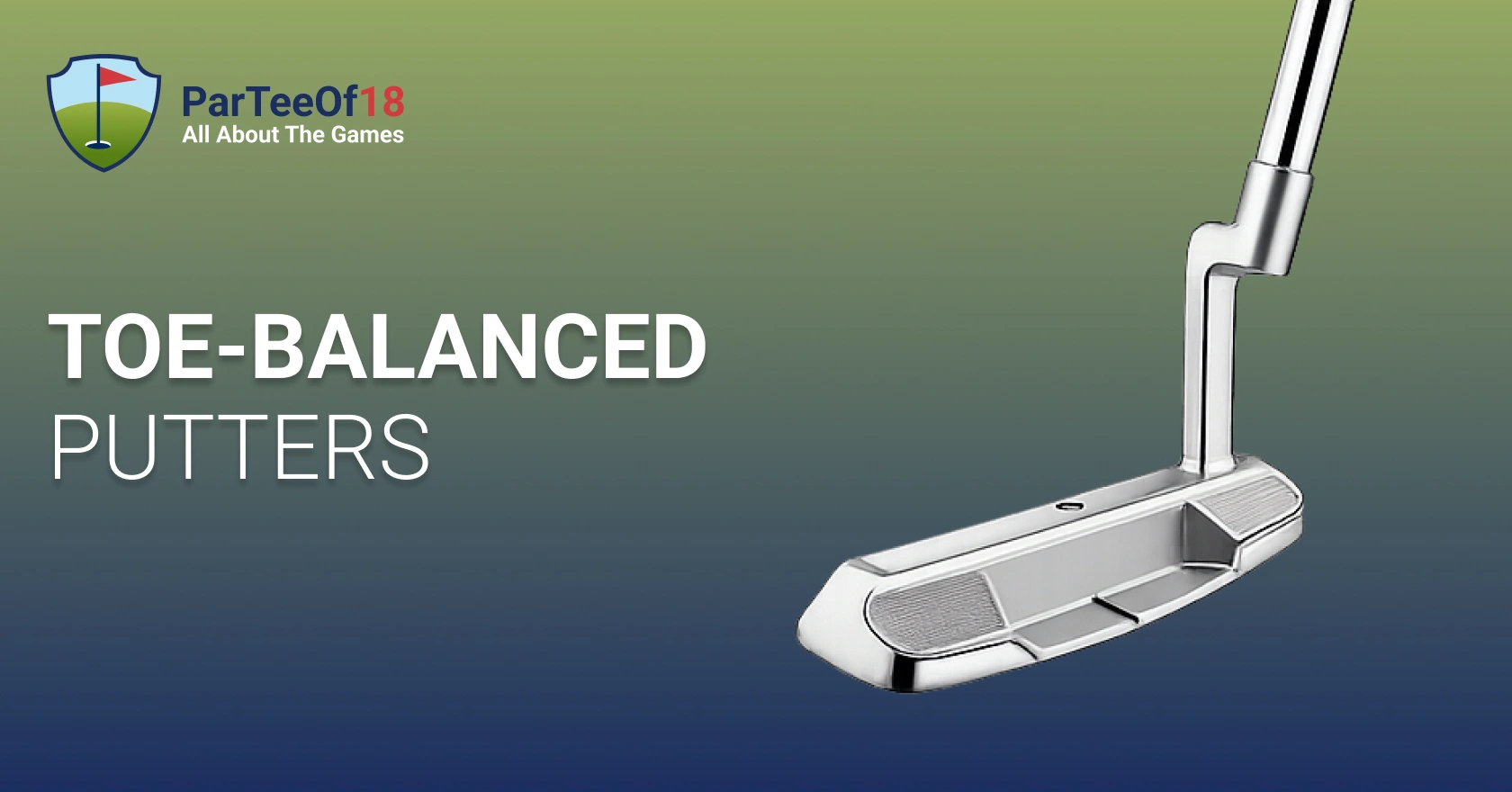
As the name suggests, weight is concentrated towards the toe of the club. Toe balanced (or toe-hang) putters have their center of gravity positioned so the toe points toward the ground when balanced on a finger, ideal for golfers with an arc-style stroke. This design helps close the clubface through impact, reducing pushes to the right. They are ideal for players with more hand/wrist action.
Key Factors to Consider When Choosing a Putter
It’s not about the hype when you choose a putter; it’s about what helps you make more putts. Choosing the right putter involves matching technical specifications to your unique stroke style, physical posture, and personal feel preferences. Before you choose between different types of putters, here are some things to think about:
- The Design of the Putter Head: Choose between a blade (better feel and control for arc strokes) and a mallet (higher MOI and forgiveness, helps with straight strokes) based on your stroke arc and need for consistency.
- Tools for Alignment: Choose alignment lines, dots, or shapes that look good to you and help you consistently square the face at address for better accuracy.
- Length of Putter: The right length makes sure your eyes are over the ball, and your posture is comfortable. The standard length is 33 to 35 inches, and it should feel natural.
- Balance and weight: Match the putter’s balance (face-balanced vs. toe-hang) to your straight or curved stroke and choose the right weight (heavy or light) for better control and stability.
- Grip on the Putter: Choose a grip size that fits your hands, lets you control your wrist action, and feels good to improve your stroke stability and confidence.
- Design of the Shaft: Consider using standard steel shafts for a better feel or stability, or composite shafts that minimize twisting on off-center hits. These shafts are available in straight or bent, offset styles.
- Insert for the Material and Face: Face inserts make the ball feel softer and roll better, while all-metal faces give firmer feedback, which helps you control distance on greens that are faster or slower.
- Money: Set a budget to help you choose between high-end, custom-fit options and low-cost, high-quality models. You can find good putters at all price points.
Start Your Smarter Golf Journey Today!


How to Choose The Right Putter for You?
When picking the right putter, you need to match the head design (mallet vs. blade) to your stroke type (straight or arc), find the right length for your posture, and choose a weight that works with your tempo. When choosing a model, it’s important to match face-balanced models for straight strokes or toe-hang models for arc strokes. Unlike drivers or wedges, where swing speed dominates the conversation, this types of golf club is all about feel, alignment, and consistency.
Best Types of Putters for Beginners
New golfers don’t need things to be hard; they need help with alignment and forgiveness. Here are the best putters for beginners:
- Mallet Putters: High MOI designs are more stable and work better when you hit them off-center.
- Face-Balanced Models: Make it easier to hit the ball straight back and through.
- Large Alignment Aids: Clear dots or lines make it much easier to aim.
If someone is new to golf, starting with learning the basics of golf putting tips, and a forgiving mallet putter is often the best choice.
Best Type of Putters for Intermediate and Advanced Players
As your stroke gets better, feel and feedback become more important. The following types of putters are discussed for the median golfers:
- Milled Blade Putters: Give you cleaner feedback and better distance control.
- Toe-Hang Putters: Good for strokes that naturally rotate in an arc.
- Custom fitting: Adjusting the length, lie angle, and head weight (including weights that can be changed) can make a big difference in how consistent you are.
At this level, small tweaks make a big difference. The right types of putters shouldn’t force your stroke to change; it should complement it.
You May Also Checkout: Lob Wedge vs Sand Wedge: What’s the Difference and When to Use Each?
Conclusion
It’s not about trends or copying what someone else plays when you choose between the different types of putters. It’s all about finding a putter that fits your stroke, how you like to line up, and how it feels overall. The right choice of putter should give you confidence as soon as you put it behind the ball, whether it’s a forgiving mallet or a precision-milled blade. When everything is in place, strokes and putts that go in more easily happen.
FAQs
How many different putters are there?
There are hundreds of different models made by different companies, but golf usually falls into three main functional types of putters: blade, mallet, and mid-mallet. These are also divided into groups based on hosel/neck design, face technology (milled vs. insert), and weight distribution (toe-hang vs. face-balanced) to fit different strokes.
What are the types of putting?
There are two main types of strokes in golf: arc and straight-through. There are also different grip styles that can help you be more accurate and fight the “yips.” Common grips are cross-handed (left-hand low), claw, and arm-lock. Golfers usually choose one based on whether they use a blade or a mallet putter.
What is the most forgiving style of putter?
High-MOI (Moment of Inertia) mallet putters are the most forgiving as they have big heads, perimeter weighting, and better stability to keep shots from going off-center. Some popular types of putters are angular wingback designs (like the Phantom 7), 2-Ball models, and designs that are very stable and have no torque.
What to look for in buying a putter?
To pick the right types of putters, you need to match your stroke type (straight or arc) to the balance, choose a head style (mallet for forgiveness/alignment, blade for feel), and get fitted for the right length (33–35 inches on average) and lie angle. Think about how the face feels (insert vs. milled) and try out a few different options on a green to make sure they are comfortable, stay aligned, and let you control the distance.
All Premium Features Unlocked
No catch. Cancel anytime




MacKenzie Tyler is a competitive golfer preparing to turn professional on the LPGA Tour. A former All-League golfer and three-sport athlete, Tyler spent nine seasons caddying at Sebonack Golf Club on Long Island, where she developed a thorough understanding of the game. In 2025, she won the Long Island Amateur at -4 over 36 holes, qualified for the U.S. Mid-Amateur, and became the first alternate at her U.S. Women's Open qualifying site after leading the field through round one.


Related Posts

9 Fun Golf Putting Games to Play (Practice Green and On the Course)
Discover fun golf putting games for the practice green and real rounds, plus the drills that back them up and...

What Is a Chip Shot in Golf? How to Hit It and When to Use It
Learn what a chip shot is, when to chip vs. pitch vs. putt, and how to hit it clean. Simple...

What Is Lag Putting? (And the 3 Drills That Actually Fix It)
Learn what lag putting means, why distance control matters, and three practical drills to help reduce three-putts and improve your...

What Is PCC in Golf? Playing Conditions Calculation Explained
PCC is the daily adjustment that corrects your score differential when a course plays easier or harder than its rating....