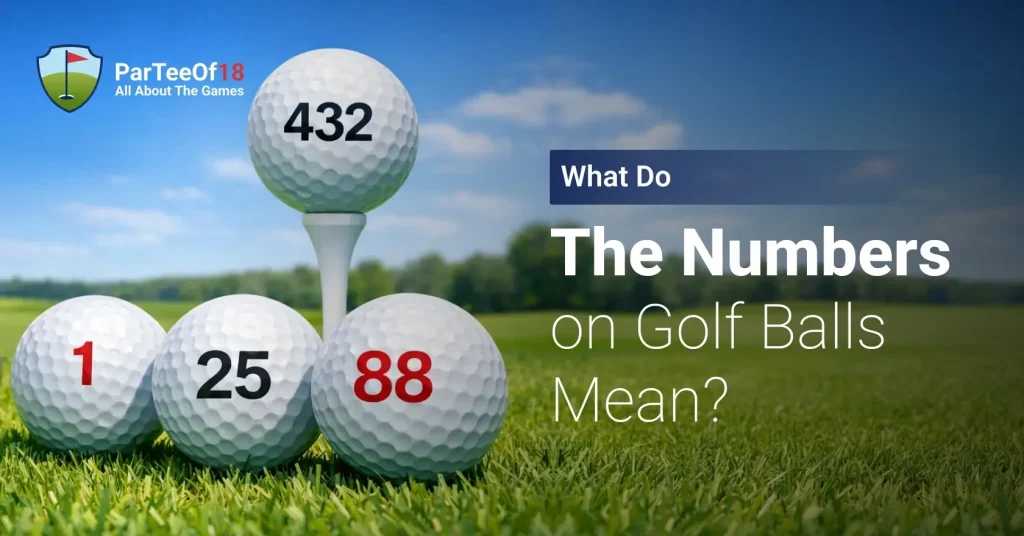
Have you ever stopped before hitting a tee shot and thought about what does the number on a golf ball mean? Well, you are not the only one. A lot of golfers see the small printed number but don’t think much about it. That small detail, though, has more meaning than you might think. So, what do the numbers on golf balls mean? Is it there just to help you tell them apart, or do they indicate something about how well they work and how they were made? Let’s take a closer look and find out what those numbers mean.
What Do The Numbers On Golf Balls Mean?
The number of digits on a golf ball serves a different purpose. Most golfers just see single, double, and triple-digit numbers as simple identifiers, but they can mean different things when it comes to identification, compression, or design features.
Single-Digit Numbers (1-4)
Single-digit numbers are the easiest numbers to grasp on golf balls as they are primarily used for player identification, helping golfers distinguish their ball from others in their group, especially when using the same brand and model. The majority of golf balls are numbered between 1 and 4, which are the standard or most common numbers, which can go up to 9 single-digit numbers, preventing penalties for playing the wrong ball and helping identify provisional shots. The color of the single-digit number (such as black or red) in some brands can tell which model you are playing.
Two-Digit Numbers (10-99)
While those single-digit numbers help you identify the ball, you might have noticed some golf balls display double-digit numbers such as 30, 60, 90, and these tell a completely different story. These numbers indicate the ball’s compression rating, which measures the ball’s firmness. The lower the compression, the softer the ball, and the higher the compression rating, the harder the ball.
To get maximum distance, you want to compress the golf ball, so the perfect ball will depend on the swing speed. If you swing under 85 mph, you’ll want a softer ball with lower compression (30-60) to get more distance and also produce less spin, while if you got faster swing over 100 mph, then you’ll want a harder ball with higher compression (90+) for better shot control as the firmer balls generate more spin.
Manufacturers use standardized methods to measure the degree of deformation of the ball under consistent force, and also make sure that the compression ratings are accurate and comparable across different brands. If you come across a ball with a small 80 or 90 printed on the side, it typically indicates an older compression-marked model. In modern golf, displaying two-digit compression numbers has largely been phased out, making such balls more commonly associated with designs from decades ago.
Three-Digit Numbers (300-500)
The three-digit numbers that you notice on the golf balls, like 332, 463, or even 574, are not some random codes or serial numbers. These are the dimple counts on the golf ball. Dimples are small indentations on the ball’s surface (between 300 and 500) that affect its aerodynamics and flight characteristics, and manufacturers sometimes print the count right on the ball.
Dimples are not just for decorations on the golf ball; they reduce air resistance and create lift, helping the ball travel about twice as far as it would without them. While dimple counts were more commonly displayed on golf balls in the past, they are less frequently shown on modern balls; however, they continue to be a significant aspect of performance engineering in golf terms.
How Do Manufacturers Choose Numbers for Golf Balls?
Manufacturers choose golf ball numbers mainly to help golfers differentiate similar balls and avoid confusion on the course.
- Golf ball numbers are selected with player psychology in mind, including superstitions, personal preferences such as birthday dates, or lucky numbers.
- Brands think about how choosing a number might affect a golfer’s confidence, how well they think they’re playing, and how consistent they are during a round.
- Numbering golf balls helps with branding and marketing strategies by making it easier for people to remember the product and model identification.
- The history and evolution of golf ball numbering systems have seen changes over time to meet the needs and preferences of players.
- Clear numbering ensures compliance with standard rules set by the USGA and R&A.
How Do Golfers Mark Their Balls Without Numbers?
The rules of golf suggest marking your ball with something unique for identification purposes. If your golf balls do not have a number, here’s how you can do the marking for easy recognition:
- Dots: Putting one or more dots next to the brand logo or number is a simple but effective way to do this.
- Lines of Alignment: Drawing lines or several lines around the ball or along its side makes it easier to find and aim putts or tee shots.
- Initials or Words: Putting your initials on the ball makes it easy for golfers to find their own ball and avoid mixing it up with others.
- Stamps and Symbols: Some players use stamps, stencils, or even permanent markers (like Sharpies) to make fun designs with arrows, stars, or small logos that make their mark unique and personal.
- Color Coding: Using different colors, like blue or bright pink, for markings makes them stand out, as popularized by players like Bubba Watson.
Just like choosing the right golf ball or types of golf clubs, small details such as markings and numbering can contribute to better organization and overall course management.
Start Your Smarter Golf Journey Today!


FAQs
How can you tell how old a golf ball is?
To find out how old a golf ball is, look at the “side stamp” (arrows, lines, or logos next to the brand name). These change every 1-2 years to show which generation the ball belongs to. Use the USGA Conforming Lists website to find out which release years these markings match up with. If you keep modern, high-performance balls in a cool, dry place, they should last for up to seven years.
Are expensive golf balls worth it?
For mid- to low-handicappers who want the most spin, control, and consistent flight in their short game, expensive golf balls (usually $40 to $55 or more per dozen) are usually worth it. They have urethane covers and a multi-layer construction that makes them work better on the greens. But for beginners or high-handicappers who lose a lot of balls, surlyn-covered balls with 2-3 layers are a better deal and cost-effective.
What if two players pick the same ball number?
If two players use the same brand, model, and number, it’s not a penalty, but there is a “wrong ball” risk. If a ball cannot be positively identified, it is considered lost. Players must mark the balls that make them easy to tell apart. If they can’t, both balls are considered lost if they are found together.
Does the number change how the ball plays?
The number of digits on a golf ball (one, two, or three) usually doesn’t change how the ball plays. These numbers are mostly for identification and, in the past, to show things like compression or dimple count. They are meant to help golfers to determine their ball from the others in the group.
Can I Legally Use Golf Balls With No Numbers Printed on Them?
Yes, you can legally use golf balls that don’t have numbers on them as long as they are on the USGA List of Conforming Golf Balls. Golf rules don’t say that the ball has to have a number on it; it just has to meet size, weight, and speed standards.
Do softer golf balls go further?
For most golfers with moderate to slow swing speeds (less than 100 mph), softer (lower compression) golf balls tend to go further as they are easier to compress, which makes the balls go faster and spin less. But for people who swing fast (>105 mph), firmer, higher-compression balls usually provide more distance.
Do Numbers affect performance?
The numbers on golf balls don’t change the physical performance (distance, flight, or spin), but they are important for keeping track of your score and avoiding penalties. The performance of a ball is determined by its internal construction (core, layers, cover), not the number printed on it.